

The Hume Band 2.0: New Generation Longevity Wearable.
14-day battery. Patented UltraLux strap. Blood pressure trends. AI-powered coaching. Here’s an independent breakdown of what’s actually new, from a physiotherapist who does real-life tests on health wearables.

🔒 Order your Hume Band 2.0 directly from the official Hume Health website, secure checkout, 45-day return policy.
💡 Use the code MYREVIEWABOUT at checkout, same code that worked for v1 still applies to the 2.0.
45-day refund policy
Free worldwide shipping
Free app included
What’s Actually New in the Hume Band 2.0
The Hume Band 2.0 generation is here. In my experience as a physiotherapist, here’s a clear, evidence-based breakdown of every change, pulled from Hume’s official product announcement and specs, with my honest take on which upgrades actually matter.
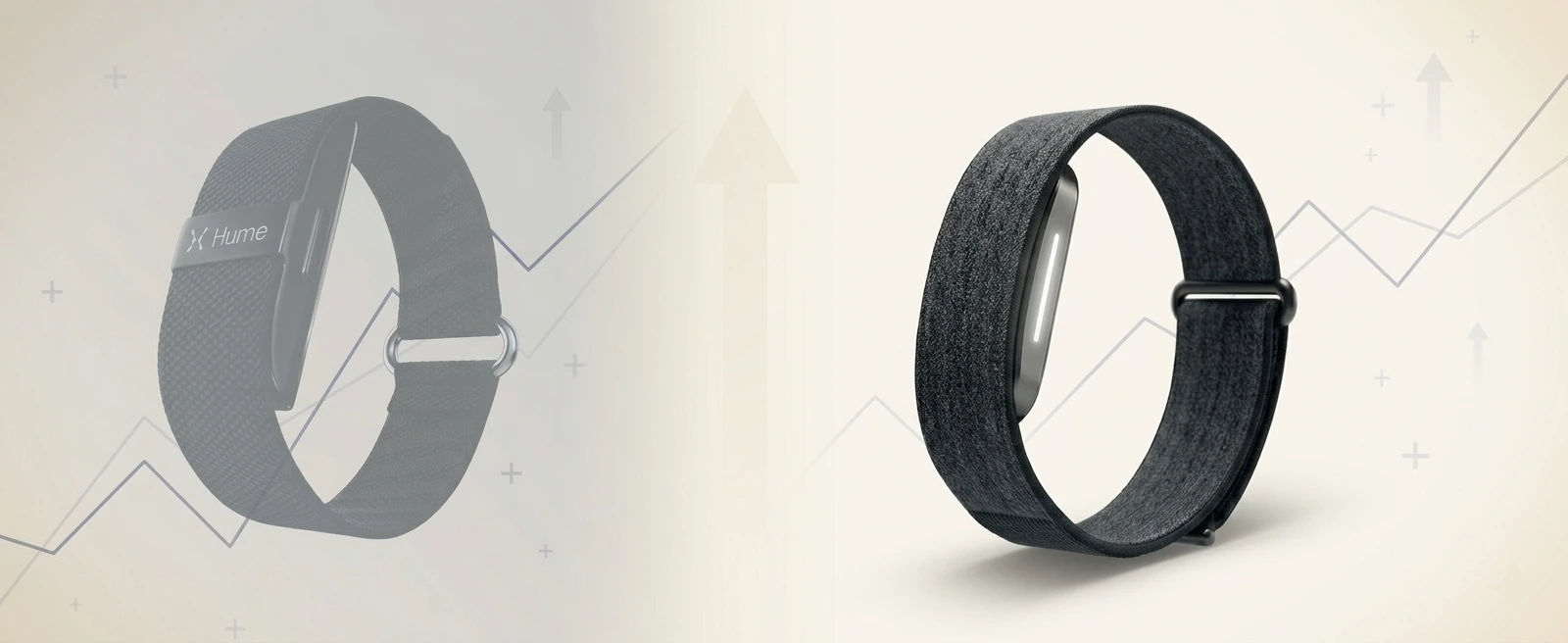
14+ Day Battery Life
v1: 7 daysv2: 14+ days
Hume claims the 2.0 doubles battery life and a 5-minute quick-charge gives you a full day of tracking. If accurate, this is the biggest practical upgrade for daily wear, half the charging interruptions.
Major upgradeBlood Pressure Trends
v1: Not trackedv2: Trends tracking
A genuinely new capability. Hume positions it as trends (not isolated readings), so it’s about pattern detection across days and habits. From a clinical standpoint, blood pressure trend awareness is more useful than spot readings.
New capabilityUltraLux Patented Strap
v1: Standard fabricv2: UltraLux soft-touch
New patented soft-touch performance material, Hume claims it’s lightweight, breathable, and “built to disappear on your wrist”. I’ll verify the comfort claim once I receive the unit; the original was already comfortable for 24/7 wear.
Meaningful upgradeImproved Signal Accuracy
v1: Lab-grade sensorsv2: Better signal processing
Hume claims better signal processing for “more reliable health insights and clearer trends”. The sensor hardware appears similar; the gain is in the algorithms interpreting the raw data. Hard to verify without hands-on testing.
Meaningful upgradeNutrition Tracking
v1: Not availablev2: Coming June 2026
Hume is shipping nutrition tracking as a 2.0-exclusive feature in June. The goal: connect food intake with biometric response (HRV, sleep, recovery), closing the loop between input and output. Promising if execution matches the pitch.
Coming soonAI-Powered Coaching
v1: Basic insightsv2: Premium AI coach
Marketed as “your personal doctor and health coach”. It’s part of the Hume Premium subscription ($8.99/mo, optional). The base 2.0 still works without it. I’ll evaluate whether the AI insights are genuinely useful or generic, that’s the eternal wearable question.
Optional add-on
The Device
What is the Hume Band 2.0?
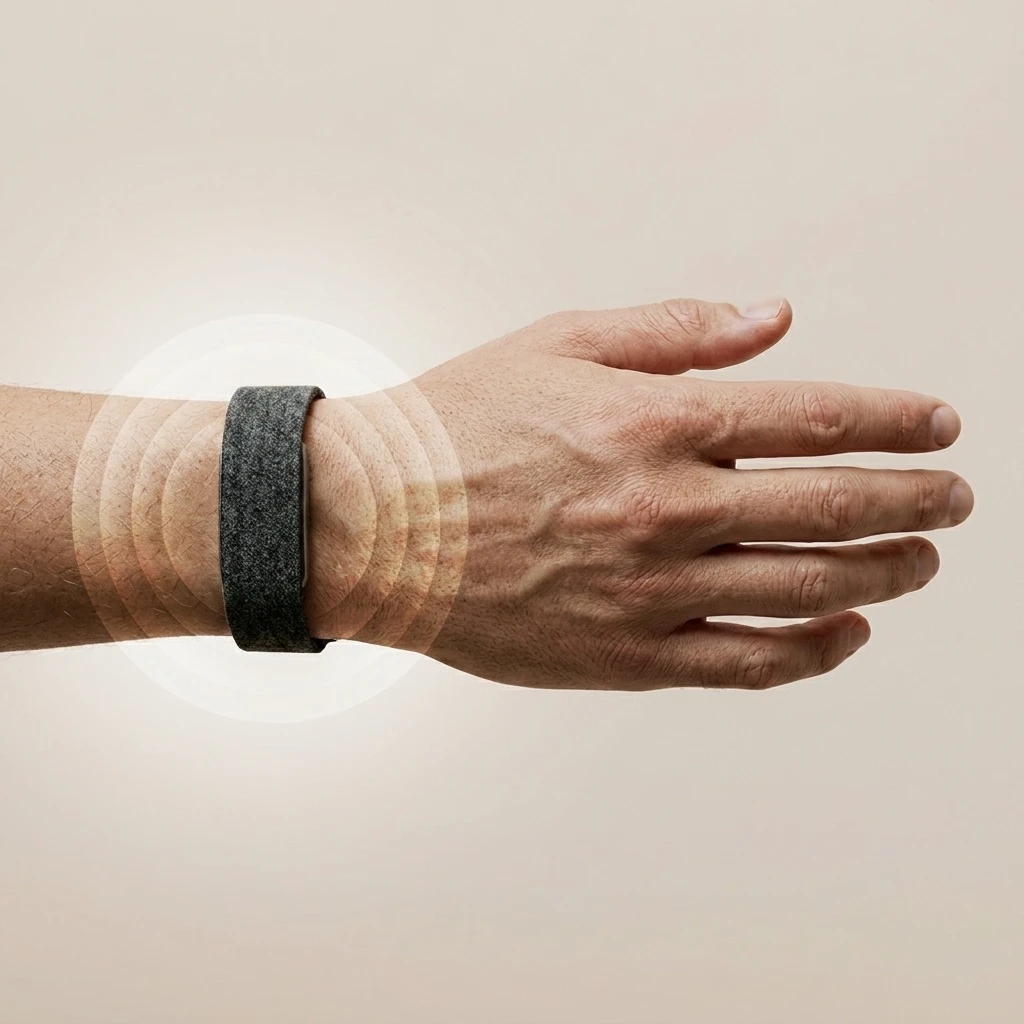
The Hume Band 2.0 is a continuous health tracker built around biomarkers, not step counts. It reads heart rate variability, blood pressure trends, metabolic momentum, and biological age, then translates the data inside the Hume Health app.
It’s the second generation of a device that quietly stood out in 2025 for doing one thing well: turning daily wear into a longitudinal picture of how the body is actually trending. The 2.0 keeps that approach and rebuilds the hardware around it. New 14-day battery, the patented UltraLux strap, refined optical sensors, and a faster processor that cleans up signal noise the v1 occasionally struggled with.
It sits on the wrist like a watch, but the design intent is closer to a medical-grade monitor in consumer packaging. There’s no notification feed, no app store, no apps competing for attention. The Hume Band 2.0 tracks. The Hume Health app explains. That’s the whole product.
As a physiotherapist, that’s the part I respect most. Most consumer wearables build a stadium of features around the body. The Hume Band 2.0 builds quiet infrastructure around the data, then steps back.
The Mechanism
How does the Hume Band 2.0 work?
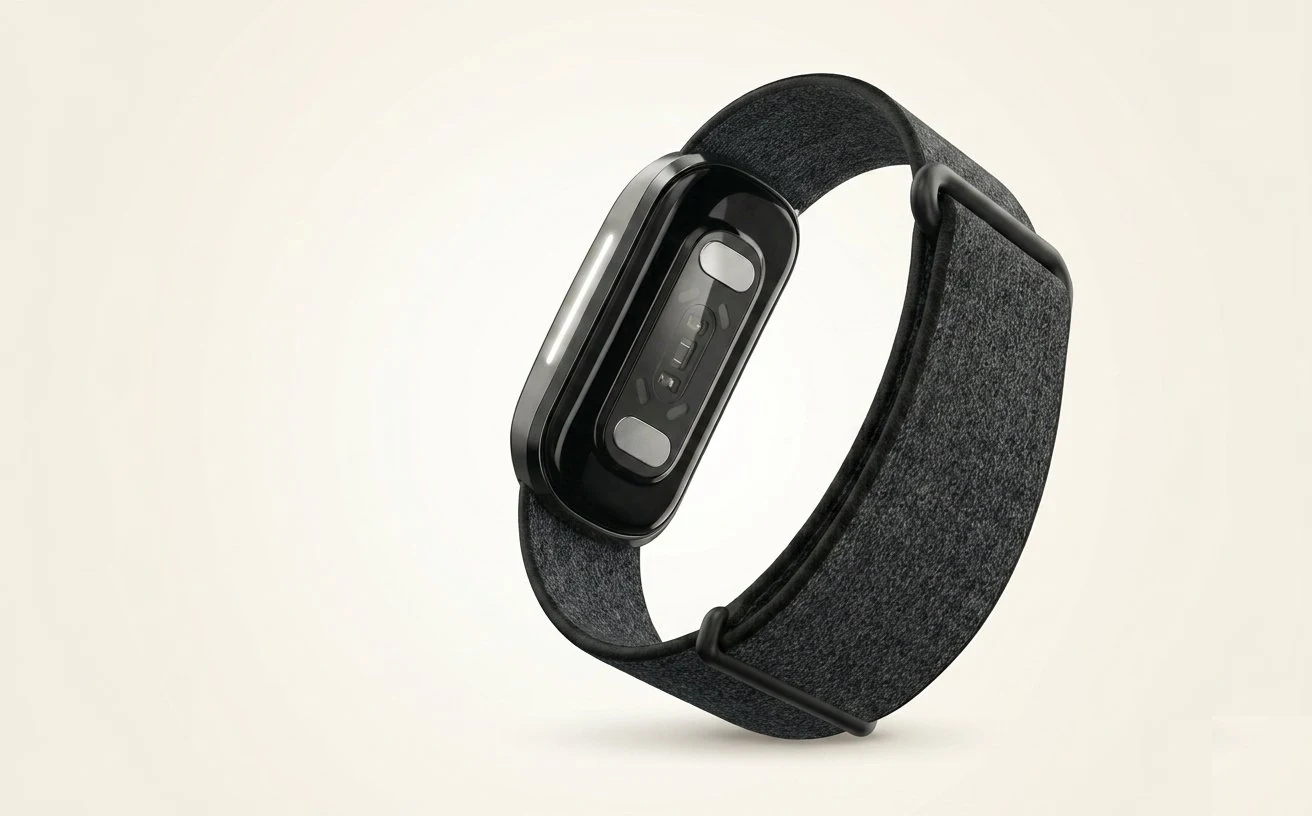
The 2.0 uses a stack of optical and electrical sensors on the underside of the band to read what’s happening in the small blood vessels of the wrist, continuously, day and night.
The optical array measures photoplethysmography signals, the same physical principle most wearables use, but with a higher sampling rate and a processor that filters motion artifact more aggressively than the v1. That means cleaner heart rate variability data, more reliable resting heart rate, and the foundation for the new blood pressure trend feature.
A second sensor track reads skin temperature variation and electrodermal response. Together they feed the Hume Health app a continuous stream of raw biomarker data, around 1,400 individual data points per day with typical wear.
None of it shows up as a number on the device. The band has no screen, no haptic prompts, no real-time readouts. It collects, syncs, and gets out of the way. The interpretation happens later, in the app, when you actually have time to read it.
In a clinic, I read raw signal data the same way: not as a verdict in the moment, but as a pattern across time. The 2.0 is built for that read.
The Translator
The Hume Health app turns the data into something you can use
Raw biomarkers don’t change behavior. Patterns do. The app is where the band’s continuous data stream becomes a story you can actually read.
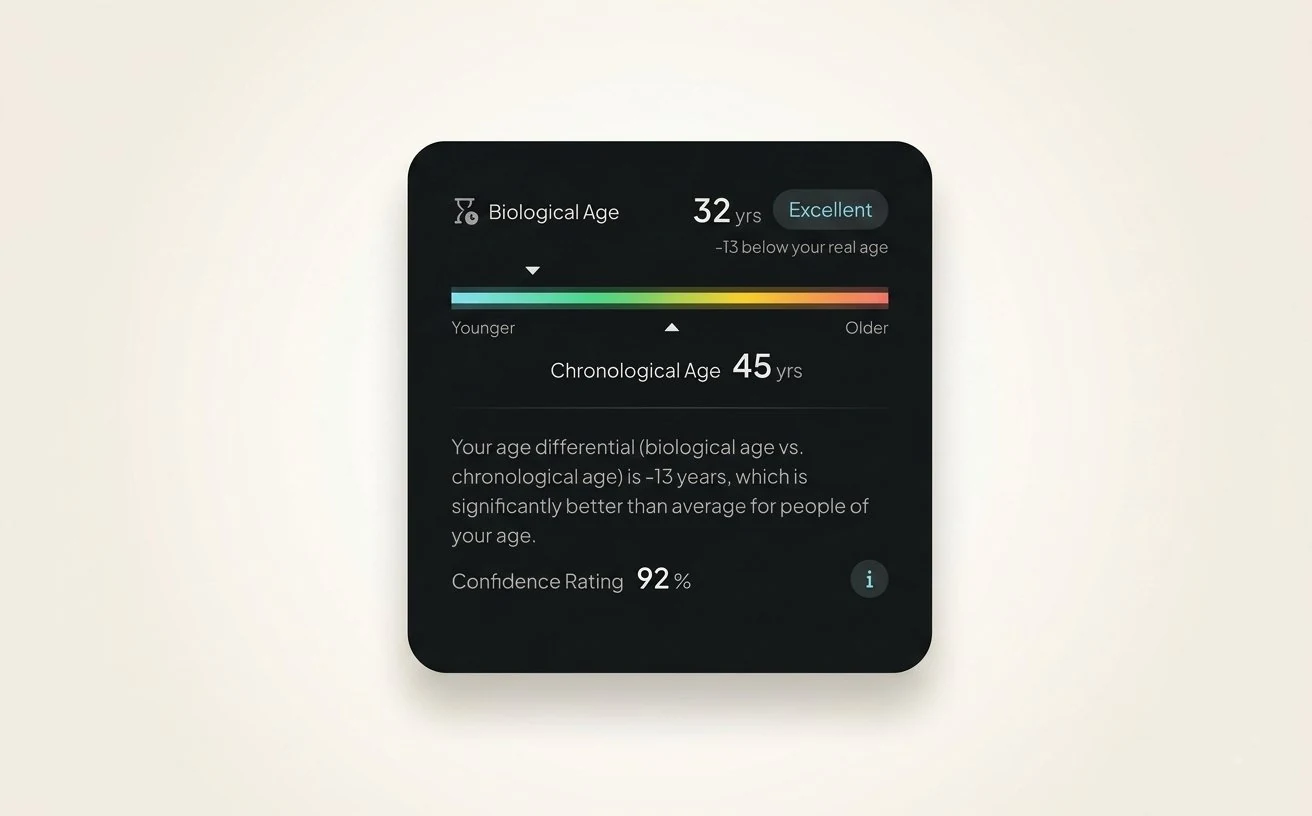
The home dashboard. Biological age sits at the center, with the underlying biomarkers ranked by deviation from your personal baseline.
Biological age, not just a number
The dashboard’s headline metric is biological age, a composite score built from heart rate variability, resting heart rate, sleep architecture, and the new blood pressure trend data. It’s not the gimmick it sometimes is in other apps. The Hume model recalculates daily and shows you which underlying inputs moved the score and in which direction. If your biological age ticks up by a year, you can see whether it’s HRV, sleep, or blood pressure driving it before you decide whether to care.
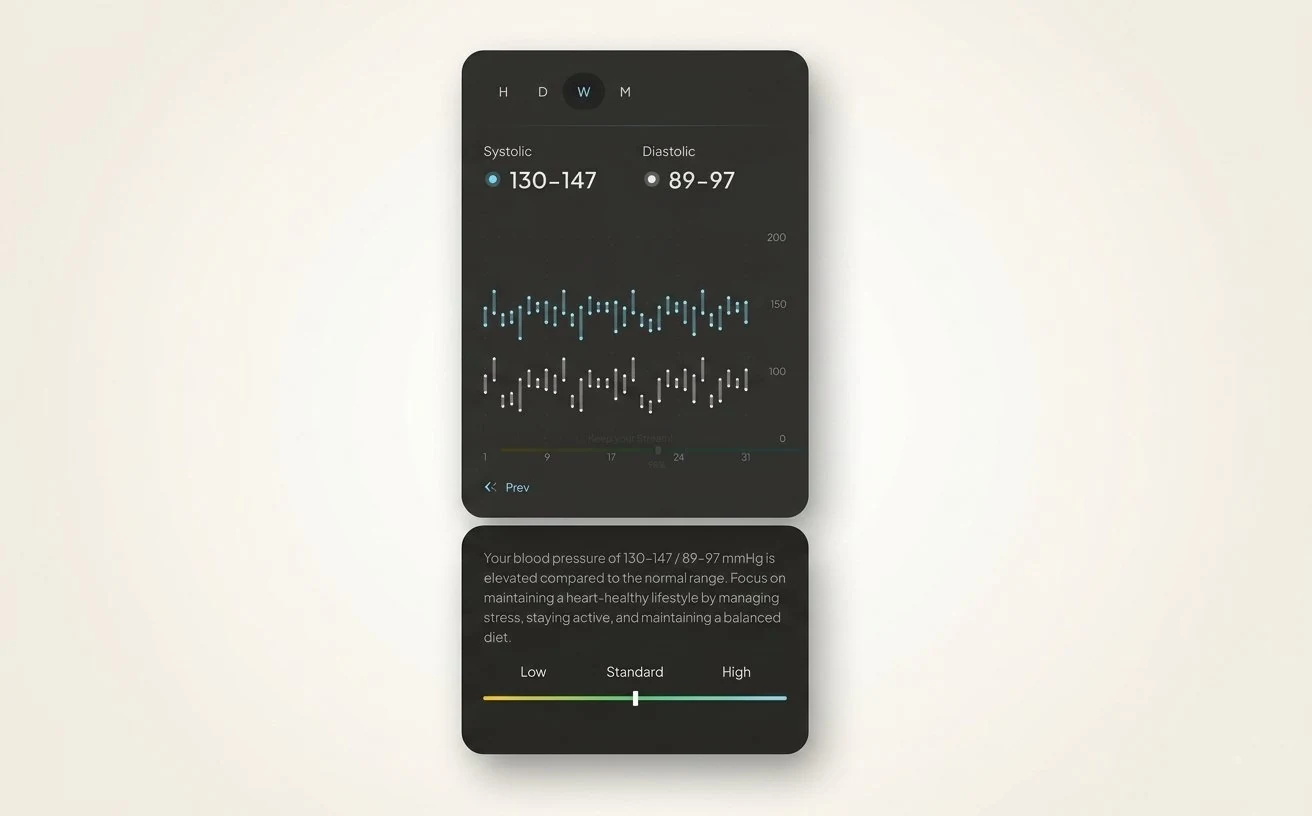
Blood pressure trends. Not isolated readings, pattern detection across days and behaviors.
Blood pressure trends, the headline new feature
The 2.0’s blood pressure tracking isn’t a replacement for a cuff. It’s a trend view. The app shows your weekly and monthly systolic and diastolic averages, flags upward drift, and correlates it with what changed in your life. Poor sleep, alcohol, stress, sodium-heavy meals, all of it gets a column. For someone managing borderline hypertension, this is the kind of pattern detection a quarterly doctor visit will never produce. As a physiotherapist working with patients on cardiovascular load, I find this view more useful than most isolated cuff readings, because pattern beats single point of measure every time.
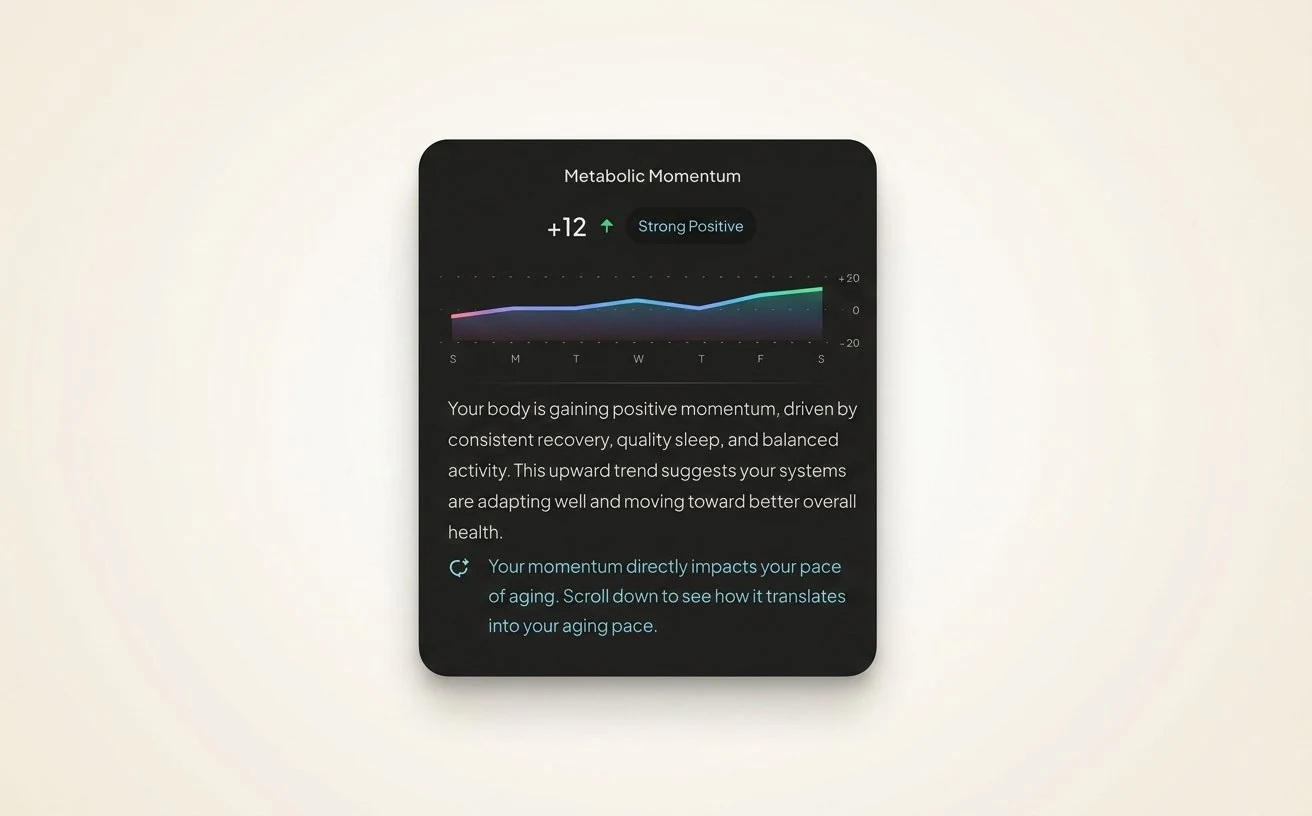
Metabolic momentum. The proprietary score the app uses to flag whether your engine is gaining or losing efficiency.
Metabolic momentum, the score Hume built around recovery
Metabolic momentum is Hume’s proprietary composite: how efficiently the body is recovering between sleep cycles, how stable HRV is across the week, how much your resting heart rate is wandering from baseline. It’s the score you check when you’re deciding whether to train hard or back off, whether a stressful work week is showing up in the body, whether the last month of changes is moving things in the right direction. It’s the closest thing the consumer market has to a daily readiness score that doesn’t feel arbitrary.
Steps, calories burned, active minutes, ring closures. The thinking was reasonable. Movement is something a device can count, and counting feels like progress. The problem is that movement was always a proxy. The thing that actually matters, what’s happening inside the cardiovascular and metabolic systems hour by hour, was always a level below what step counts could see. A person who hits 10,000 steps daily and sleeps four hours has a worse health trajectory than a person who hits 6,000 and sleeps eight, and no step counter will ever flag it.
Heart rate variability tells you how the nervous system is recovering. Blood pressure trends tell you how the vascular system is loading.
Metabolic momentum tells you whether the body’s engine is gaining or losing efficiency week over week. These are not lifestyle metrics. They are physiological signals that correlate with the conditions that actually shorten lives.
That’s the entire pitch of the 2.0, and it’s why the absence of a screen on the device isn’t a flaw. The band isn’t competing for attention during the day. It’s collecting data so that, in a quiet moment, you can sit down with the app and read a longitudinal picture of your own physiology. Steps in a day are a number. Six months of HRV trend lines are a story.
All of this works without a subscription. The raw biomarker data, the scores, the trend graphs, the daily Biological Age readout, are all available with the device alone. Hume Premium ($8.99/month) adds an AI coaching layer on top of the data, a free band upgrade every two years, and a few extra interpretive features. It’s optional, and it’s the same plan whether you own the v1 or the 2.0. If you want to understand what the subscription actually changes day to day, the Hume Premium breakdown covers it in detail.
In my experience as a physiotherapist, the wearables I trust are the ones that report on the body without trying to manage it. The 2.0 fits that brief. It’s the rare device I’d put on a patient and forget about, knowing it would be honest about what it sees.
The Balance
Pros and cons of the Hume Band 2.0
As a physiotherapist who does real-life tests on health wearables, here is my honest read on the 2.0, with the strengths and the caveats laid out plainly.
Pros
- Doubled battery life. 14+ days of typical use against the v1’s 7. The single most practical upgrade for daily wear.
- UltraLux soft-touch strap. Engineered for 24/7 wear, breathable, softer against the skin than the original SuperKnit fabric. Less of a spec, more of a quality-of-life improvement.
- Blood pressure trend tracking. Continuous optical sampling that produces longitudinal pattern data, the first time this has shipped at this price point.
- Enhanced signal accuracy. Same 5 LEDs and 4 photodiodes as the v1, but a faster processor and refined firmware deliver cleaner data. Hume Health says this delivers best-in-class accuracy validated in lab studies and third-party testing.
- Sharper Chronic Illness Detection. The same biomarker pattern engine v1 introduced, now feeding off the 2.0’s cleaner signal. Earlier and more reliable flags on recovery, heart resilience, and metabolic shifts.
- The subscription stays optional. Hume Premium ($8.99/month) adds AI coaching but the device works fully without it. The data is yours either way. Full Hume Premium breakdown →
- 45-day return policy. No-questions-asked window, longer than the standard 30-day return most competitors offer.
- Same price as the v1, but with all the upgrades. The 2.0 is priced at $249, exactly what the original Hume Band retails for today. If you were already considering the v1, there is no reason left to choose it. Same price, every upgrade included.
Cons
- Blood pressure is trend data, not a cuff replacement. The 2.0 estimates directional patterns from optical signals. It cannot give you a clinical 128/82 reading. If you need that, you still need a cuff.
- Nutrition tracking ships in June 2026. Not included on the device today, and any new feature deserves a wait-and-see test before being called a deciding factor.
- No screen, no real-time prompts. The design philosophy is deliberate, but if you want a watch face, notifications, or in-the-moment workout coaching, the 2.0 is the wrong device.
- The full coaching layer needs Hume Premium. The raw scores and trends are free with the device. The AI nudges and personalized recommendations require the $8.99/month subscription, which compounds over years of ownership.
As a physiotherapist, my read is that the cons are mostly category truths (no wrist wearable can replace a cuff, no AI coaching is meaningful without context) rather than specific failures of the 2.0. The pros are concrete, verifiable, and lined up with what actually drives long-term health outcomes.
The Comparison
Hume Band 1.0 vs Hume Band 2.0
A side-by-side at the spec level, then the practical read on which differences actually matter day to day.
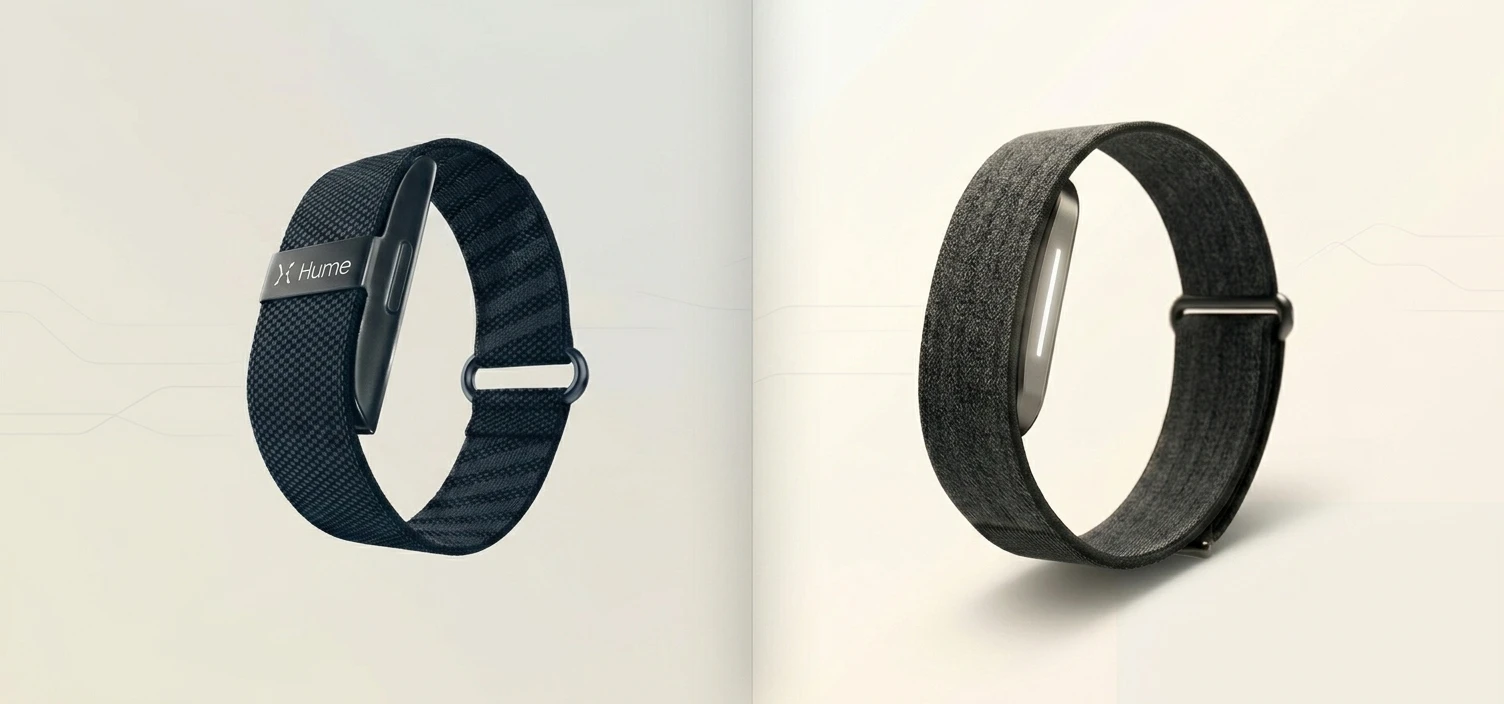
| Feature | Hume Band 1.0 | Hume Band 2.0 |
|---|---|---|
| Battery life | 7 days typical wear | 14+ days typical wear |
| Strap | SuperKnit fabric bands | Patented UltraLux soft-touch strap |
| Sensor module | 5 LEDs, 4 photodiodes | 5 LEDs, 4 photodiodes (enhanced accuracy via better processing) |
| Blood pressure tracking | Not available | Continuous trend tracking (optical, non-cuff) |
| Chronic Illness Detection | Available (v1 baseline) | Available (refined via improved signal accuracy) |
| Nutrition tracking | Not available | Software update, June 2026 |
| Hume Health app | Same app, full feature parity | Same app, full feature parity |
| Hume Premium subscription | $8.99/month, optional | $8.99/month, optional (same plan, both devices) |
| Water resistance | IP68, 1m for 2h | IP68, 1m for 2h |
| Warranty | 1 year, extendable to 10 for $35 | 1 year, extendable to 10 for $35 |
| Return policy | 45-day, no questions asked | 45-day, no questions asked |
| Price | $249 (current retail) | $249 (current price) |
The Decision
Should you upgrade to the Hume Band 2.0?
Three honest reads depending on where you’re standing. In my experience as a physiotherapist, here is how I’d think about it.
If you own the v1
The upgrade isn’t urgent
Your original Hume Band is still tracking the core biomarkers. The app is the same. Hume Premium carries over. You don’t need to upgrade just because the 2.0 exists.
Upgrade if:
- Weekly charging genuinely frustrates you (14 days is the only true game-changer)
- You have a clinical reason to track blood pressure trends
- Your v1 strap is starting to irritate or wear out
Verdict: Wait and watch the nutrition feature land in June.
If you’re a new buyer
Go with the 2.0, no reason to look back
At $249, the 2.0 sells at the exact price the v1 retails for today. The decision becomes a question of features, not budget. The 14-day battery alone reshapes the daily experience.
What you get on day one:
- Doubled battery over v1
- UltraLux strap, designed for 24/7 wear
- Blood pressure trend tracking (new on v2)
- Cleaner signal accuracy via refined processing
- Sharper Chronic Illness Detection on the better sensor data
Verdict: The clear pick. Buy the 2.0.
If you’re new to Hume entirely
Start with the 2.0, skip the v1 generation
Hume is a different category from most mainstream fitness trackers and smartwatches. The 2.0 is the right entry point: it’s the version that defines what the device is now and what it’ll be when nutrition tracking lands.
What to expect early:
- 2-3 weeks to build personal baselines
- Quiet wear, no notifications, no daily prompts
- Once-a-day app check-in, not constant monitoring
- Real behavioral signal after 6-8 weeks
Verdict: A considered first wearable, not an impulse buy.
The Audience
Who should get the Hume Band 2.0?
Three people I’d recommend it to without hesitation, each for a different reason. The device isn’t for everyone, but for these readers it’s a strong fit.
Recovery, not just steps
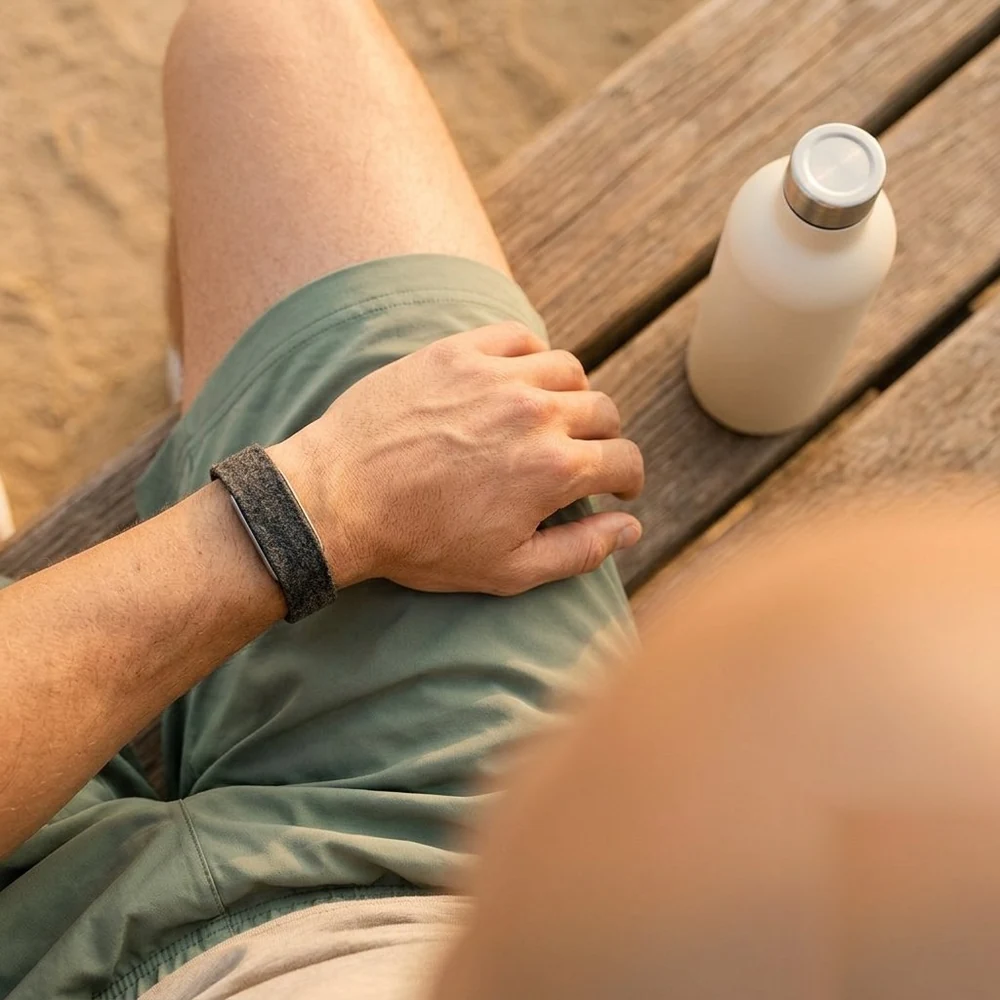
Athletes use the Hume Band 2.0 to track recovery, heart rate variability, and metabolic momentum, not just steps and calories burned. The band reveals when the body is ready to train hard and when it needs to back off. As a physiotherapist and former competitive athlete, that signal is what I wish every patient had access to before they decided to push through fatigue.
Biological age, biomarker drift, the long view
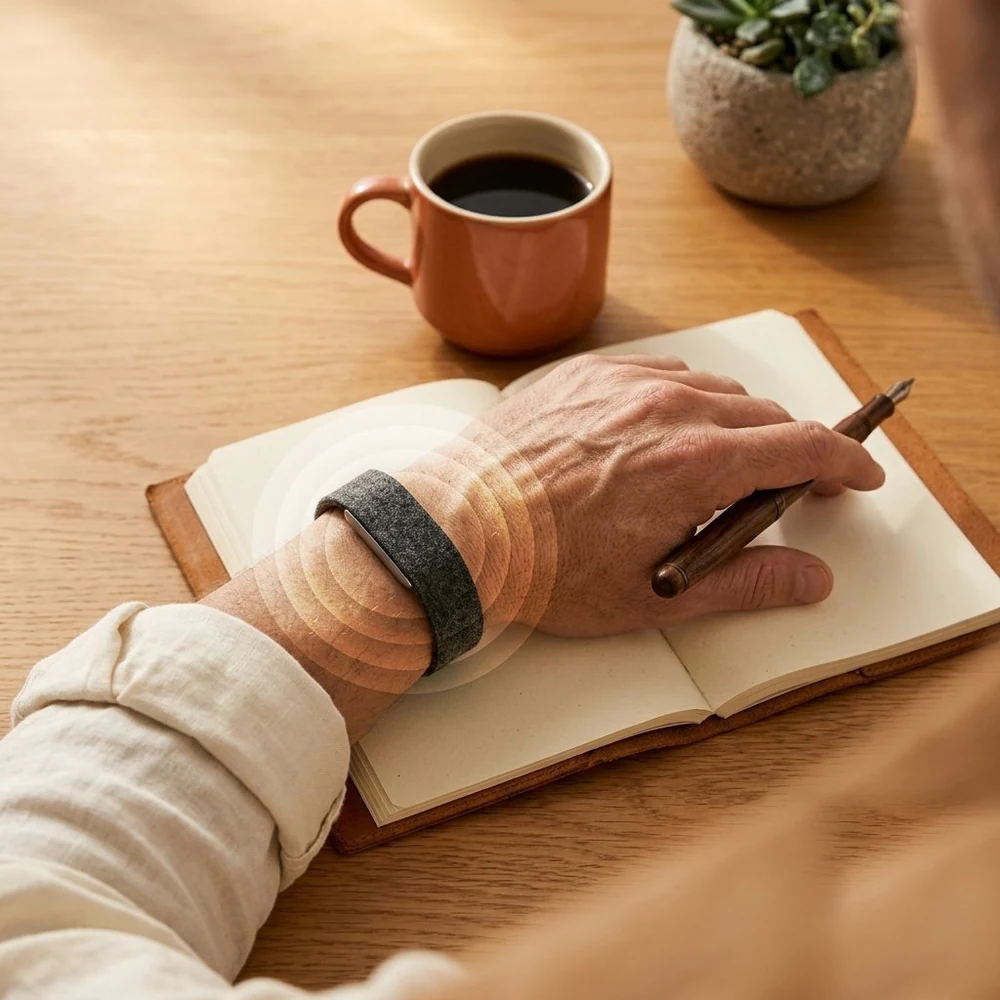
Longevity-focused adults use the Hume Band 2.0 to track biological age, blood pressure trends, and metabolic capacity while they work, without needing to think about it. The device collects in the background, the app delivers the story once a day. It’s the lowest-friction way to keep a longitudinal eye on the metrics that actually correlate with healthspan.

Quiet, continuous awareness
Adults monitoring chronic health risk use the Hume Band 2.0 to track biomarker pattern shifts that flag early concerns before symptoms appear. The Chronic Illness Detection layer is genuinely useful here. Not as a diagnostic, but as a quiet alarm system that says “something has changed, look closer” weeks before the body would otherwise let you know.
The Deal
Hume Band 2.0 price and current deal
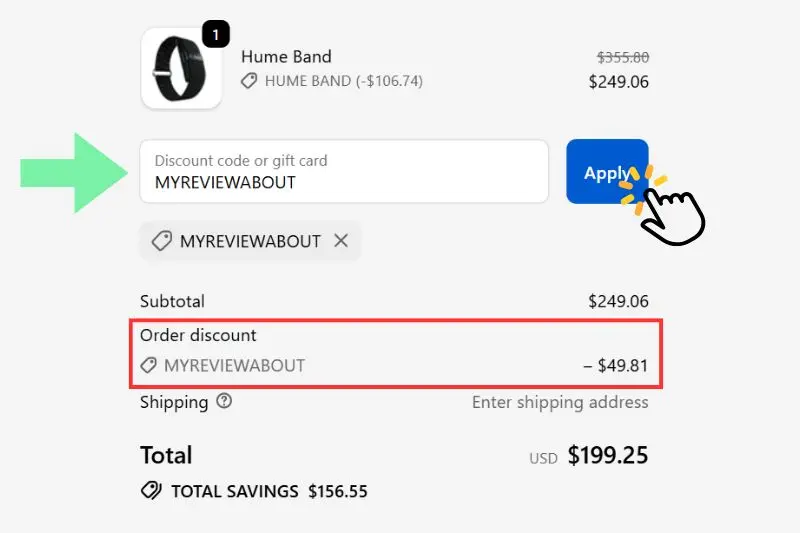
Here’s exactly what you pay when the discount code is applied at checkout, taken from a real Hume Health order.
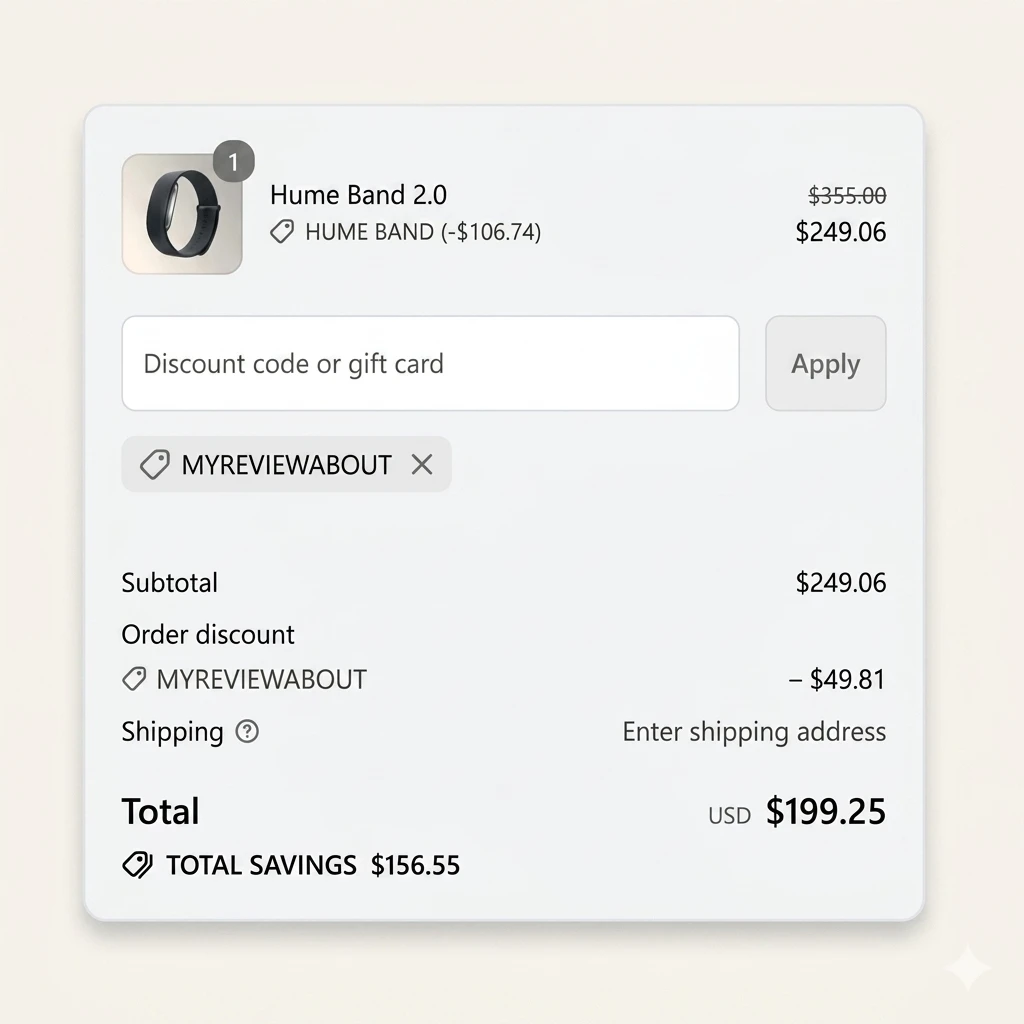
$249 sale, $199 with the code
💡 Use code MYREVIEWABOUT at checkout for an additional 20% off. Same code works for the v1.
One-time purchase. No mandatory subscription. 18 interest-free payments of $13.84 available at checkout. Free worldwide shipping, 45-day no-questions-asked return, 1-year warranty extendable to 10 years for $35. Order direct from the official Hume Health site.
The Questions
Frequently asked questions about the Hume Band 2.0
Common questions about the new Hume Band 2.0, what’s different from v1, compatibility, upgrade path, and what’s coming next.
What’s the difference between the Hume Band 1.0 and 2.0?
The 2.0 brings five main upgrades over v1: doubled battery life (14+ days vs 7), the new UltraLux soft-touch strap, blood pressure trend tracking, improved signal accuracy via better processing, and nutrition tracking arriving June 2026. The Hume Premium subscription works on both. Full breakdown in the Hume Band 2.0 vs 1.0 comparison.
Does my Hume Premium subscription work with the 2.0?
Yes. Hume Premium subscriptions ($8.99/month) carry over between v1 and v2, you don’t need to re-subscribe when you upgrade the device. Your Hume Health app account stays the same, and your historical data is preserved.
Is the 14-day battery life realistic in real-world use?
Hume claims “up to 14 days with typical use” and notes that frequent syncing and continuous tracking may reduce that. I’ll verify the real-world number once I test the unit. For context: the v1 was rated 7 days and held up to that under normal daily wear during my testing.
How does the Hume Band 2.0 track blood pressure?
The 2.0 uses optical sensors to track blood pressure trends, patterns across days and habits, not isolated cuff-style readings. It is not a replacement for a medical blood pressure monitor. Hume positions it as pattern detection: spotting if your average systolic is creeping up, or if specific behaviors (poor sleep, alcohol, stress) correlate with shifts. As a physiotherapist, my read is that this view is more clinically useful than isolated readings for spotting cardiovascular risk over time.
Is the Hume Band 2.0 a medical device?
No. The Hume Band 2.0 is a consumer wellness device, not a regulated medical device. It is designed to give you trend visibility on your biomarkers so you can make informed lifestyle choices. It does not diagnose conditions, and it does not replace clinical care.
Do I need a monthly subscription to use the Hume Band 2.0?
No. The core features work fully without a subscription. The Hume Premium membership ($8.99/month) unlocks AI-driven coaching and a free Hume Band upgrade every 2 years, but it is entirely optional. The raw biomarker data, scores, and trend graphs are all available without it. If you want to evaluate the subscription separately, see the full Hume Premium breakdown or check Hume Premium on the official site.
When does the Hume Band 2.0 ship?
The Hume Band 2.0 is available now and ships worldwide directly from Hume Health, with free shipping included. The nutrition tracking feature is a planned software update scheduled for June 2026, after which it will be available to all 2.0 owners through a Hume Health app update.
What is the return policy on the 2.0?
Hume offers a 45-day, no-questions-asked return and exchange policy on the 2.0, with free returns. The device is IP68-rated (water-resistant 1m for 2h) and comes with a 1-year limited warranty, optionally extendable to 10 years for $35. The Hume Health app is free to download regardless of subscription tier.
Is the Hume Band 2.0 worth the price?
Retail is $356, the current sale brings it to $249, and code MYREVIEWABOUT drops it to $199, a saving of $156 off retail. At $199 with free worldwide shipping, a 45-day return, and no required subscription, the Hume Band 2.0 is one of the most accessible entry points into serious longevity tracking on the market today.