

Hume Band 2.0 Review: The Pros, The Cons, and What’s New in the Second Generation
Everything You Need to Know Before Buying the Hume Band 2.0 in 2026
If you’ve been wondering whether the new Hume Band 2.0 is worth the upgrade, or if you’re considering buying your first longevity wearable, this in-depth Hume Band 2.0 review will give you the full picture, the honest pros, the real cons, and what no one else is telling you about Hume’s second-generation tracker.
Unlike most fitness trackers that focus on steps, calories, and surface metrics, the Hume Band 2.0 tracks your Metabolic Capacity, Metabolic Momentum, Recovery, and now Blood Pressure Insights, four powerful indicators that reveal how your body is actually performing under the surface. With a doubled 14-day battery life, the new UltraLux soft-touch strap, and improved signal accuracy validated in third-party testing, the 2.0 is a confident, mature evolution of an already smart device.
In this Hume Band 2.0 review you’ll learn exactly how the device works, what’s actually new compared to the original, how the new blood pressure tracking changes the game for longevity-focused users, and whether the Hume Band 2.0 is the right fit for your health goals.
Quick Snapshot: Hume Band 2.0 Key Features
✅ Metabolic Capacity, know how much energy your body can produce and sustain over time
📊 Metabolic Momentum, see if your daily habits are improving or draining your long-term health
🩺 NEW for 2.0: Blood Pressure Insights, track directional patterns in your blood pressure across days and habits
💡 AI-Powered Micro-Coaching, personalized tips to improve energy, recovery, and longevity (Hume Premium subscription)
🔋 14-day battery life, doubled from the original Hume Band, with a 5-minute quick-charge giving a full day of tracking
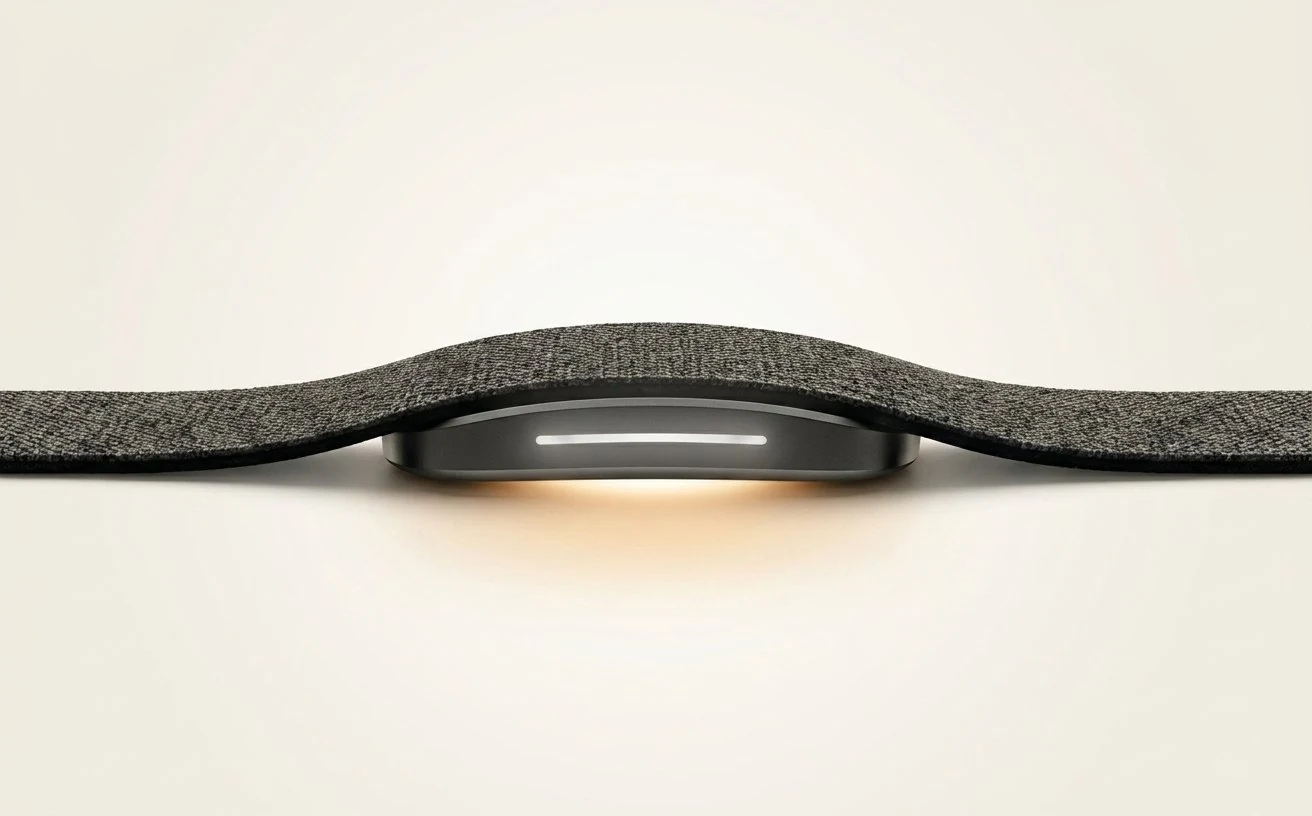
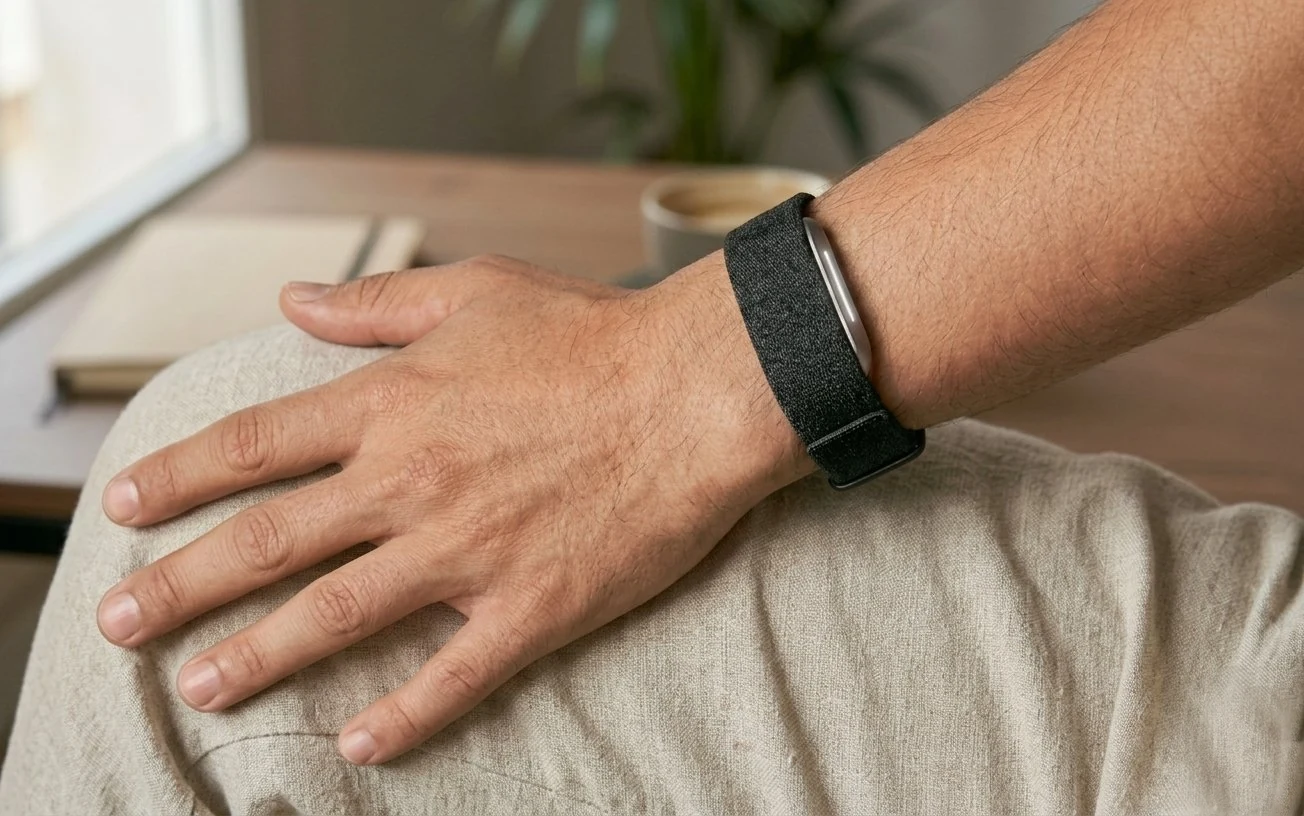
🧵 New UltraLux soft-touch strap, redesigned premium fabric for comfortable 24/7 wear
🎯 5 LEDs and 4 photodiodes, best-in-class accuracy validated in lab studies and third-party testing
🚨 Chronic Illness Detection, flags early warning signals from recovery, heart resilience, and metabolic patterns before symptoms appear
⏳ Biological Age and Pace of Aging, see how old your body is actually functioning, and whether you are aging faster or slower than your chronological age
📵 Screen-free design, no notifications, no watch faces, no dopamine loops, just data when you want it
💧 IP68 waterproof rating, water-resistant up to 1 meter for 2 hours, safe for showers and swimming
🛡️ 1-year warranty included, extendable to 10 years for $35, with a 45-day no-questions-asked return policy
What Is the Hume Band 2.0?
The Hume Band 2.0 is the second-generation longevity wearable from Hume Health. It is designed to track your metabolic health, not just your fitness stats. Unlike traditional trackers that focus on surface-level data like steps or calories, the Hume Band 2.0 gives you a deeper view into how your body is actually functioning, recovering, and aging, day by day.
At its core, the Hume Band 2.0 measures Metabolic Capacity, Metabolic Momentum, Recovery, and now Blood Pressure Insights, four unique markers that help you understand how your lifestyle impacts your energy, resilience, cardiovascular health, and long-term healthspan.
These scores are generated from continuous, passive data tracking that happens as you wear the band, without the need for screens, manual input, or button presses. All data flows into the Hume Health app, where it is translated into actionable insights and trends.
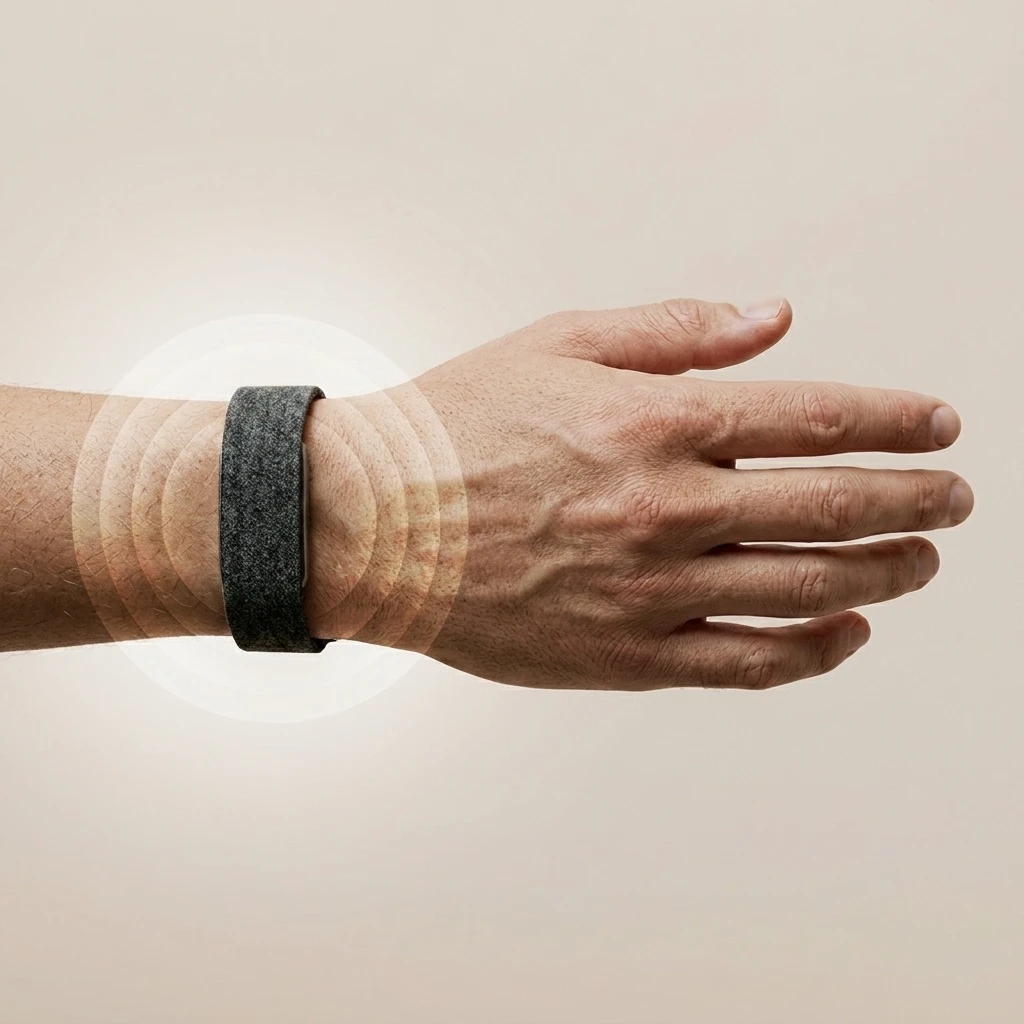
Developed by the same team behind the Hume Health Body Pod, the Hume Band 2.0 is built for people who want more than just pretty graphs, they want meaningful, actionable insights into their long-term health.
Whether you are an athlete, a biohacker, a physiotherapist (like me), or someone simply trying to improve their healthspan, the Hume Band 2.0 acts like a personal health guide, helping you interpret your body’s signals in real time.
With its screen-free minimalist design and a focus on longevity-focused metrics, the Hume Band 2.0 is built for people who care about optimizing how they actually feel, not just how they look on a fitness app dashboard. As a licensed physiotherapist, what I respect about Hume’s approach is that they measure direct biomarkers (HRV variance, SpO₂ desaturation, skin temperature shifts, blood pressure trend patterns) rather than inferring health from generic activity zones.
How Does the Hume Band 2.0 Work?
Using the Hume Band 2.0 is refreshingly simple. There are no buttons to press, no workouts to start manually, and no daily setup required. Here is the complete step-by-step of how the device works from unboxing to actionable insight.
🟢 1. Download and Pair
When you receive your Hume Band 2.0, the first step is to download the free Hume Health app from the App Store or Google Play. The app works on iOS 14.0+ and Android 8.0+. Pair the device with your phone via Bluetooth Low Energy, and the app walks you through a simple setup: age, weight, height, and a quick baseline questionnaire about your goals.
The first full charge takes around 20 to 80 minutes depending on the starting battery level. After that, you are ready to start wearing the device. The Hume Band 2.0 supports automatic firmware updates pushed through the app, so the software keeps improving over time without you having to do anything.
🟢 2. Wear It 24/7
The Hume Band 2.0 is designed for continuous wear, day and night. The new UltraLux soft-touch strap is engineered specifically for 24/7 comfort, which is a meaningful upgrade if you have ever struggled with traditional silicone fitness band straps that cause skin irritation or interfere with sleep. The device is IP68-rated and water-resistant to 1 meter for up to 2 hours, so you can shower with it on, swim short laps, and ignore the weather without thinking about it.
With the 2.0’s 14-day battery life, you charge it roughly every two weeks. The 5-minute quick-charge giving a full day of tracking is the kind of small detail that changes daily life with the device. Forgot to charge overnight? Toss it on the dock while you shower. No data loss, no broken streaks.
🟢 3. Let the AI Learn
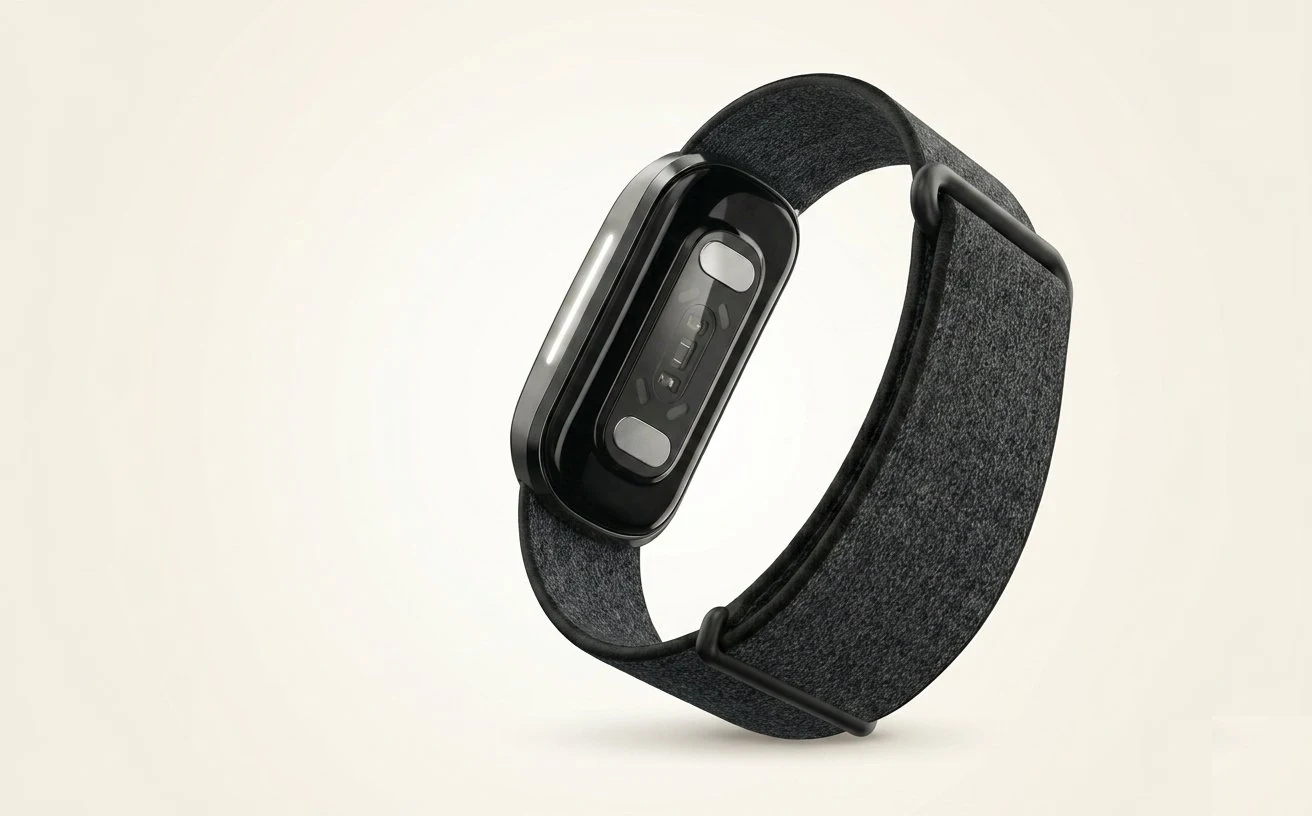
The Hume Band 2.0 uses 5 LEDs and 4 photodiodes in its sensor module to continuously capture biometric data: heart rate, heart rate variability (HRV), blood oxygen (SpO₂), blood pressure insights, skin temperature, sleep stages, activity, strain, and recovery status. Hume Health says this sensor configuration delivers best-in-class accuracy validated in lab studies and third-party testing.
For the first 2 to 4 weeks of wear, the Hume Health app’s AI is learning your personal baseline. It needs to know what your normal HRV looks like, what your typical sleep architecture is, where your blood pressure usually sits, and how your skin temperature varies. Don’t expect dramatic insights on day three. Trust the process. The baseline period is what makes everything that comes after actually meaningful.
🟢 4. Check Your Scores
Once the baseline is established, you open the Hume Health app once a day (literally, that is the whole interaction) and check your scores. The Hume Band 2.0 translates all the raw signal data into a clean, actionable scoring system:
- Metabolic Capacity, your underlying metabolic baseline
- Metabolic Momentum, short-term metabolic responsiveness, whether your habits are pushing you forward or holding you back
- Heart Resilience, cardiovascular adaptability over time
- Longevity Index, a composite biomarker estimate
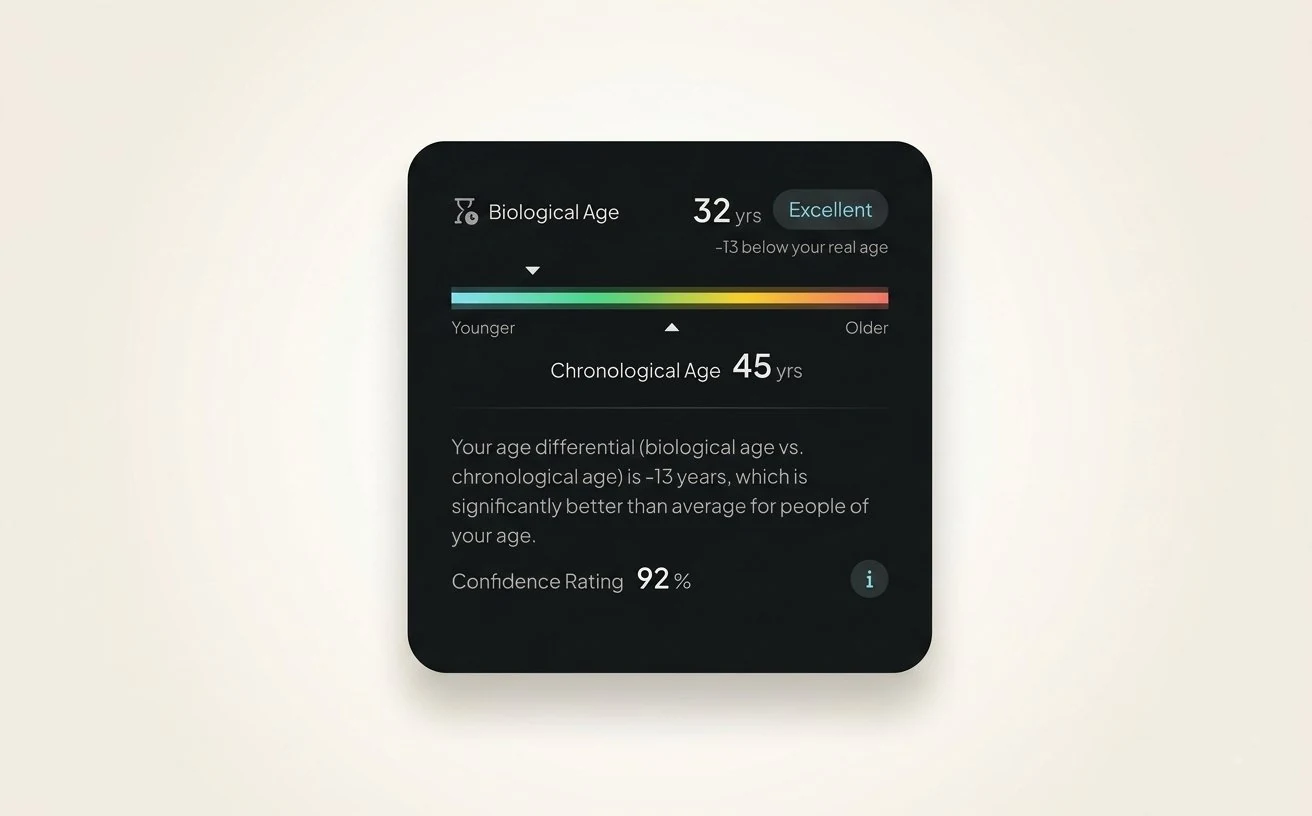
- Biological Age, with chronological age comparison and confidence rating
- Pace of Aging, whether your body is aging faster or slower than your chronological years
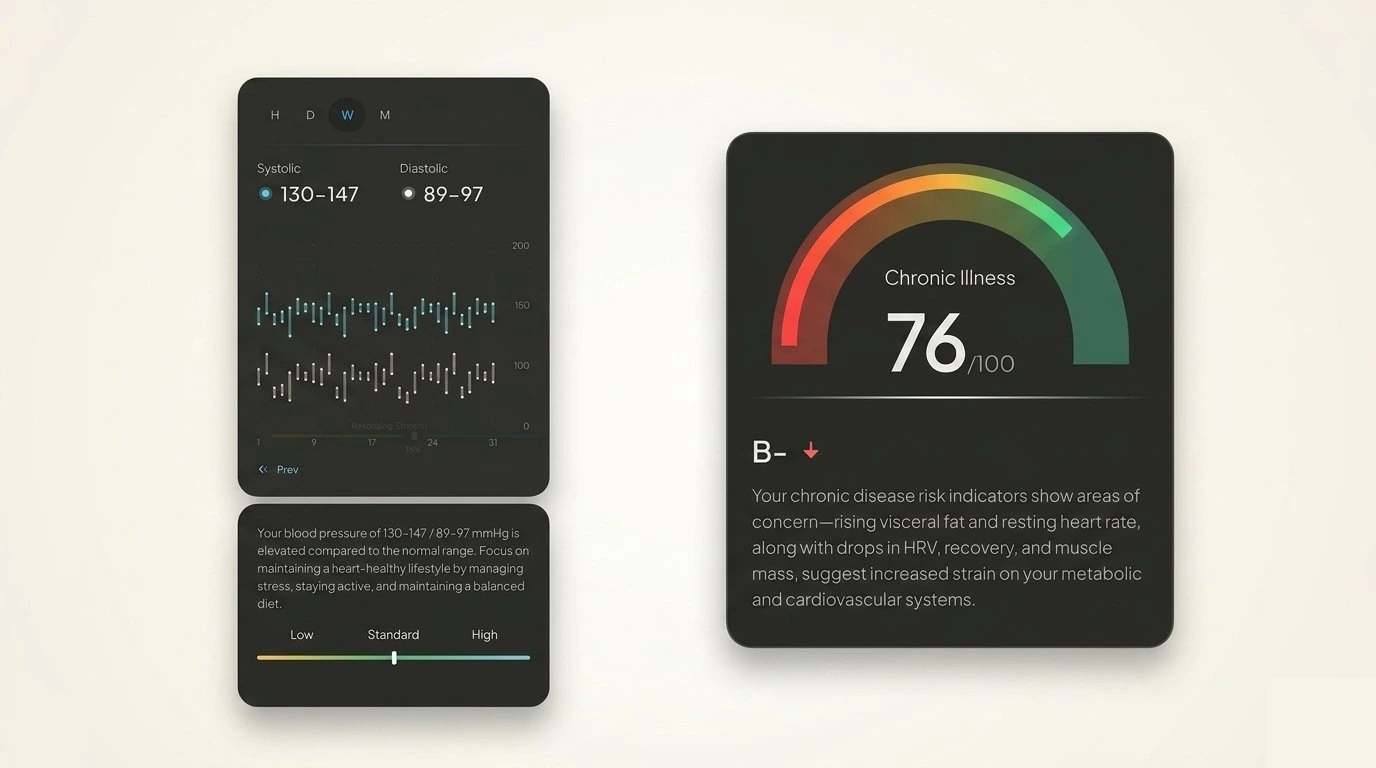
- Chronic Illness Detection, flags subtle changes in recovery, heart resilience, and metabolic signals that may indicate the onset of illness
- Blood Pressure Insights (NEW for 2.0), directional pattern detection over hours, days, and weeks
The screen-free design is intentional. You check the app once a day, see your scores, get your guidance, and then put the phone down and live your day. No constant wrist notifications hijacking your attention every fifteen minutes.
🟢 5. Act on Micro-Coaching
Beneath each score, the optional Hume Premium subscription ($8.99/month) layers in AI-driven micro-coaching: personalized tips like “Your HRV recovery curve suggests an earlier bedtime tonight,” “Your blood pressure is trending upward this week, consider reducing sodium and tracking stress triggers,” or “Metabolic Momentum is high today, this is a window for performance or productivity.” The base subscription-free experience still gives you all the raw biomarker data, scores, and trend graphs, the coaching layer is what Hume Premium adds.
Hume Premium subscribers also receive a free Hume Band upgrade every 2 years, which substantially changes the long-term value calculation. At $8.99/month, the subscription effectively includes the next-generation device when it arrives, a benefit that is genuinely unusual in the wearable category.
🩺 Blood Pressure Insights, Why This One Feature Changes the Game
If there is one feature on the Hume Band 2.0 that deserves more attention than it is currently getting, it is Blood Pressure Insights. Most reviews mention it in a bullet point. I want to spend a moment explaining what this actually does, and why, clinically, it is a much bigger deal than the spec sheet suggests.
What “trend tracking” really means
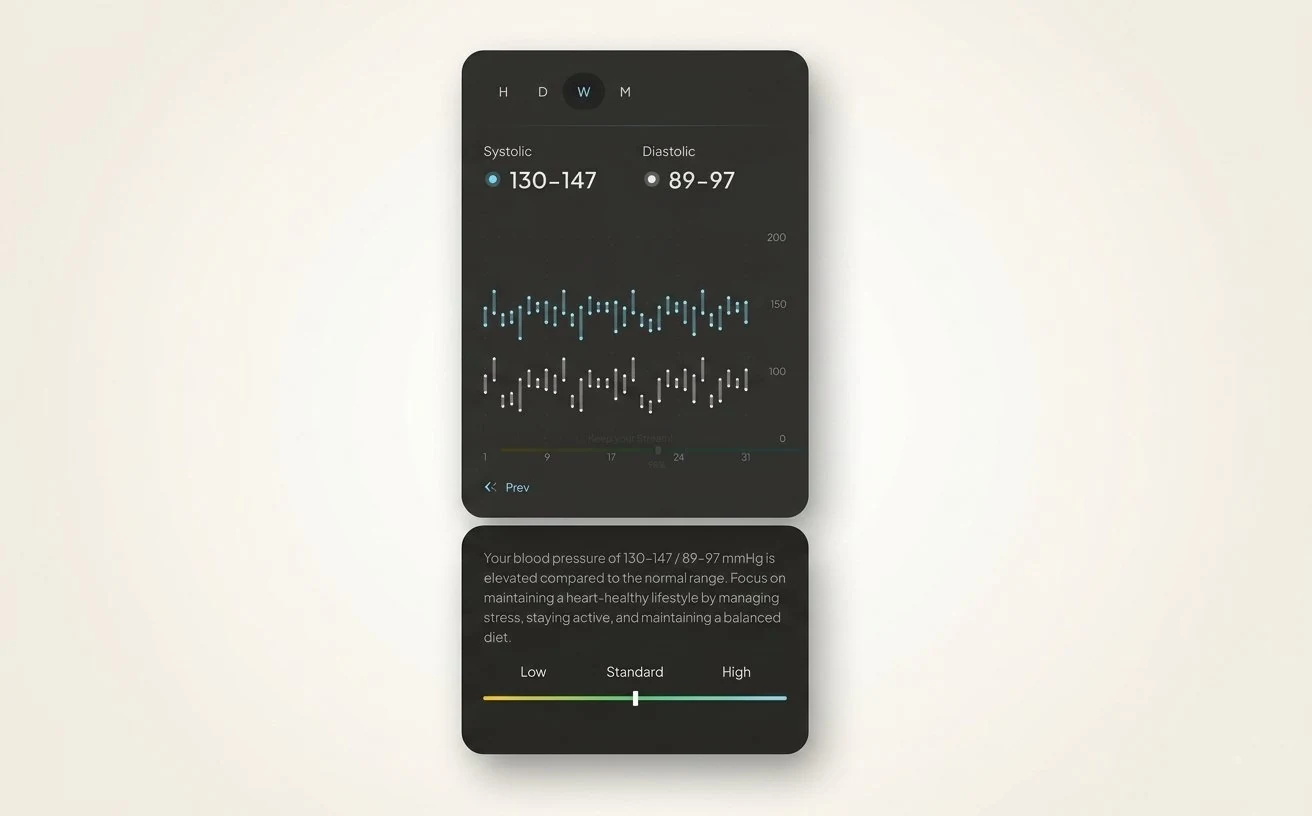
The Hume Band 2.0 does not measure your blood pressure the way a cuff does. That requires temporarily occluding an artery, and no wrist-worn device on the market today can do that with medical-grade accuracy. What the Hume Band 2.0 does instead is continuously sample optical signals from your radial artery using its photoplethysmography (PPG) sensors, then use those signals to estimate directional patterns in your blood pressure over hours, days, and weeks.
In practical terms, the band cannot tell you “your blood pressure is 128/82 right now.” But it can tell you “your average resting systolic has crept up 6 points over the past three weeks,” and that pattern signal is, clinically, what actually matters for cardiovascular risk.
Why trends beat spot readings
A traditional cuff gives you a precise number, but only at the moment you measure. The Hume Band 2.0 trades that point-in-time precision for continuous longitudinal sampling. Over weeks, that gives you something a monthly doctor’s appointment simply cannot: a high-resolution view of how your blood pressure is actually behaving day to day, week to week, in response to your real life. Sleep quality, alcohol, training load, work stress, sodium intake, weight changes, all become visible patterns.
The cross-variable advantage, where this gets powerful
This is where the Hume Band 2.0’s positioning becomes especially interesting. Because the device already tracks HRV, resting heart rate, SpO₂, skin temperature, sleep architecture, and activity, the Hume Health app can correlate blood pressure trend shifts against those other variables. That is something a standalone cuff cannot do.
Three examples of the kind of insight cross-variable analysis can surface:
- Blood pressure trending up + HRV trending down + sleep fragmentation increasing. This is the classic early signature of chronic stress load, often visible weeks before symptoms appear. Spotting the pattern early lets you intervene with sleep, training load adjustment, or stress management before it becomes a clinical issue.
- Blood pressure trending up + SpO₂ desaturation events during sleep. This pattern can flag undiagnosed sleep-disordered breathing, including sleep apnea. Sleep apnea is one of the single most under-diagnosed contributors to hypertension and cardiovascular risk, and it is almost invisible to traditional clinical screening unless you specifically test for it.
- Blood pressure trending up + skin temperature increases + elevated resting heart rate. This can signal early systemic inflammation. In a healthy person it might just be an oncoming cold. In someone with metabolic risk factors, it can be the kind of pattern that precedes a more serious event.
None of these patterns are diagnostic. The Hume Band 2.0 is a wellness device, not a medical device, and you should never treat it as a replacement for clinical care. But as a tool for spotting where to look next, what to bring up at your next appointment, what to track more carefully, where to invest in your own health habits, this kind of cross-variable trend awareness is genuinely valuable. And it has not been broadly available at this price point until now.
The honest limits
1. Accuracy is trend-relative, not absolute. The Hume Band 2.0 is calibrated to spot pattern changes in your baseline, not to give you an absolute clinical reading. If you have known hypertension or any cardiovascular condition, you still need a validated cuff monitor for actual clinical numbers. The Hume Band 2.0 complements clinical monitoring, it does not replace it.
2. The data is most useful after a baseline period. The first 2 to 4 weeks of wear are calibration. The device needs to learn what your normal looks like before it can flag what abnormal looks like. Don’t expect actionable Blood Pressure Insights on day three.
With those caveats, this is the kind of feature that genuinely justifies the term “longevity wearable.” It is not a step counter. It is a tool that gives you a longitudinal view of one of the single most important biomarkers in cardiovascular risk, and lets you correlate it with the other markers Hume has been tracking all along.
How to Use Hume Band 2.0 Data in Daily Life
The power of the Hume Band 2.0 lies in its ability to turn raw biometrics into clear, practical decisions you can act on, without needing to be a health expert or a data scientist. Here is how to make the most of it day to day.
Start Each Day with Your Scores. In ten seconds, check your Metabolic Capacity, Momentum, Recovery, and Blood Pressure Insights. Think of them as your body’s morning dashboard. If your Recovery is low and your blood pressure is trending higher than your normal, you have a clear signal to dial things down today. If everything is green, you have a clear signal to push.
Adjust Your Effort Intelligently. Low Recovery? Skip the high-intensity workout and focus on light movement or mobility. High Capacity? That is your window to push performance or productivity. The Hume Band 2.0 does not tell you what to do, it gives you the data to decide for yourself, which is exactly what a thoughtful longevity tool should do.
Follow the Micro-Coaching Nudges. If you have the Hume Premium subscription, beneath each score you will find personalized tips like “Increase protein intake,” “Go to bed 30 minutes earlier,” or “Your blood pressure is creeping up this week, consider reducing sodium.” These small, science-based nudges compound over time, no guesswork, just guidance.
Use Trends to Spot Patterns. Over a few weeks, you will start to see how your habits (sleep, stress, meals, workouts, alcohol) affect your Momentum and Blood Pressure Insights. Use this feedback loop to build routines that actually work for your body, not a generic algorithm’s idea of what should work.
Don’t Overthink It, Be Consistent. You do not need to analyze charts for hours every week. Just wear the band, check your scores daily, follow a few recommendations that resonate, and let consistency do the rest. The Hume Band 2.0’s whole design philosophy is that a calmer relationship with health data produces better health outcomes than obsessive monitoring.
✅ Pros of the Hume Band 2.0, In Depth
After analyzing the Hume Band 2.0 specs in detail, comparing them to the original, and cross-referencing Hume’s claims against independent reviews of the v1, here are the nine pros that genuinely stand out about the second-generation device.
🔬 1. Tracks What Actually Matters, Not Just Steps and Sleep
Most fitness trackers measure surface-level activity: steps, calories burned, generic “active zones.” The Hume Band 2.0 measures direct biomarkers that actually correlate with long-term health: Metabolic Capacity, Metabolic Momentum, Heart Rate Variability, Blood Pressure Insights, SpO₂, skin temperature, and recovery patterns.
As a physiotherapist, this distinction matters enormously. You can take 12,000 steps a day with a body that is silently deteriorating underneath, or you can take 6,000 steps a day with rising HRV, stable BP trends, and excellent metabolic momentum. Step-counting cannot tell you which is which. The Hume Band 2.0 can.
🩺 2. NEW Blood Pressure Insights, a Genuine Innovation at This Price Point
The Hume Band 2.0 introduces optical blood pressure trend tracking, a capability that did not exist on the original Hume Band and that remains rare in consumer wearables at this price point. It is not a clinical-grade cuff replacement, but it is a longitudinal pattern detector, which is arguably more useful for spotting cardiovascular risk over time than a once-monthly cuff reading at your doctor’s office. See the deep-dive earlier in this review for the full clinical context.
🧠 3. Smart, Personalized AI Coaching That Is Actually Useful
The Hume Premium subscription ($8.99/month, fully optional) layers in AI-driven coaching that adapts to your individual patterns. Unlike generic “drink more water, sleep more” advice you can get from any free app, Hume’s coaching connects what your data shows. “Your HRV recovery curve over the last 10 days suggests your evening alcohol intake is affecting sleep architecture, consider reducing on weeknights.” That is actionable. That is useful.
And critically, the subscription is optional. The Hume Band 2.0 works fully out of the box without paying anything beyond the device. The Hume Premium tier is the AI coaching layer on top, not the data itself.
🕵️ 4. Effortless 24/7 Tracking, No Button Pressing or Sessions to Start
The Hume Band 2.0 is genuinely set-and-forget. There are no buttons to press, no workouts to manually start, no manual logging required. You wear it, the sensors continuously sample biometric data day and night, and the Hume Health app translates everything into actionable scores. For people who hate the friction of “remembering to track,” this is a meaningful design win.
🔋 5. 14-Day Battery Life with 5-Minute Quick-Charge
Hume Health doubled the battery life from the original’s 7 days to 14 days on a single charge, and added a quick-charge feature: 5 minutes on the dock gives you a full day of tracking. A full recharge takes 20 to 80 minutes depending on starting battery level.
Why this matters more than it sounds: continuous wear is the entire point of a longevity wearable. Every time the band comes off for charging, you lose data. Sleep nights vanish, HRV trend lines develop gaps, and the algorithm has less to work with. After enough lost data points, you start losing trust in the trends themselves, which defeats the entire purpose of the device. Doubling the runtime cuts those frustrating data gaps in half. And forgetting to charge overnight is no longer a problem, toss it on the dock while you shower, you are back to a full day of tracking before you finish your coffee.
🧵 6. New UltraLux Soft-Touch Strap, Designed for 24/7 Wear
The Hume Band 2.0 ships with a new UltraLux strap, a redesigned soft-touch performance fabric specifically engineered for continuous wear. On a spec sheet this sounds like marketing fluff, but I think this one is worth taking seriously.
From my own experience with wrist wearables, traditional silicone fitness bands (Whoop is a notable culprit) caused me real skin irritation and made 24/7 wear genuinely uncomfortable, especially at night. I was not alone in this; plenty of long-term users ran into the same problem. The original Hume Band’s durable SuperKnit bands were already a clear step up from the Whoop strap, but in my honest opinion the v1 still needed improvement. I ended up sourcing a replacement strap on Amazon to make 24/7 wear genuinely livable, and it is a pity that a device of this caliber did not ship with a great band from day one. That is exactly why the new UltraLux soft-touch strap on the 2.0 is what I have been waiting for. Engineering an answer to the actual feedback from the people wearing the device is the kind of detail I respect in a brand.
📱 7. App Is Clean, Simple, and Easy to Understand
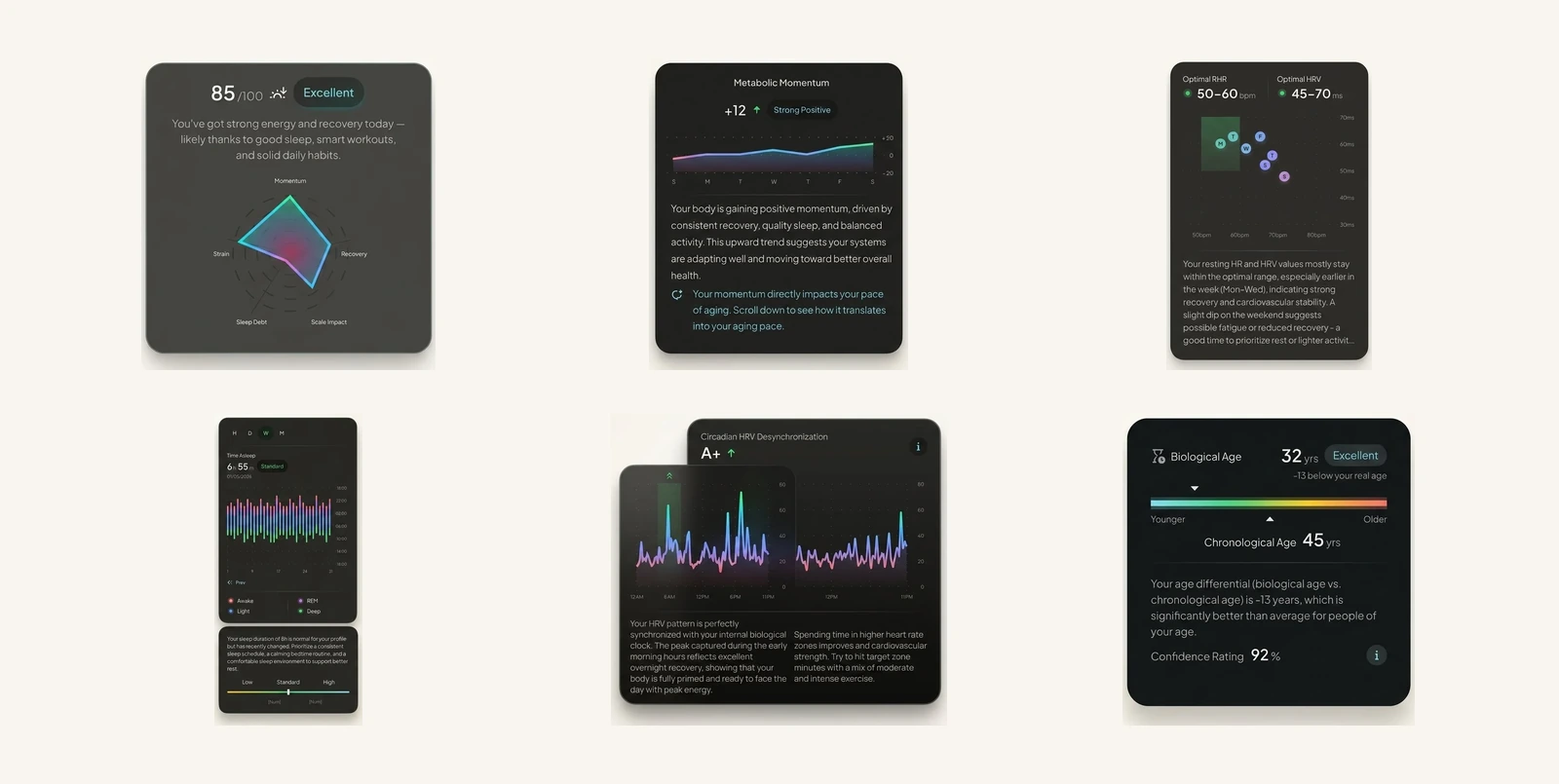
The Hume Health app translates the raw biomarker data into a clear scoring system: Metabolic Capacity, Metabolic Momentum, Heart Resilience, Longevity Index, Biological Age, and Blood Pressure Insights. Each tile shows you the score, the trend, and a confidence rating that qualifies how strong the underlying signal actually is. That last detail is important: most wearables give you a number without telling you how reliable it is. Hume shows you the confidence rating, which is a quietly mature design choice.
🙈 8. Distraction-Free Design, No Screen, No Dopamine Loops
The Hume Band 2.0 is screen-free by design. No display, no notifications, no watch faces, no haptic alerts pulling you back to your phone. That is deliberate, Hume’s philosophy is that constant on-wrist feedback drives anxiety, not health behavior change.
This is a feature I actively look for now. I have spent years fighting screen time and app addiction, the constant pings, the dopamine loop, the reflex to check the wrist 50 times a day. The Hume Band 2.0’s whole design philosophy is: one quick look at the app to understand what your body did overnight and what to focus on today, then you put the phone down and live your day. Thumbs up for that design decision.
🧪 9. Best-in-Class Accuracy, Validated in Lab Studies and Third-Party Testing
The Hume Band 2.0 uses 5 LEDs and 4 photodiodes to sample your data more frequently than most consumer wearables. Hume Health says this delivers best-in-class accuracy validated in lab studies and third-party testing. The improved signal processing in the 2.0 produces cleaner heart rate and HRV data than the original, with fewer false-positive sleep arousals and more stable trend lines.
If you have ever used an HRV-based tracker that seemed noisy or contradictory (today says “fully recovered,” tomorrow says “burnt out” with no obvious explanation), the Hume Band 2.0’s signal upgrade is worth attention. Cleaner data means more trustworthy trends, which means the device actually delivers on the longevity promise instead of just generating numbers.
🚨 10. Chronic Illness Detection, an Early Warning System on Your Wrist
One of the Hume Band 2.0’s most clinically interesting features is Chronic Illness Detection. By continuously monitoring HRV, recovery patterns, resting heart rate, and metabolic signals over time, the system flags subtle changes that may indicate the early onset of illness, often weeks before symptoms appear. This is the same principle clinicians use when reviewing biomarker trends in patients, applied passively, in real time, on your own data.
A practical example: an unexplained 3-week drop in HRV combined with rising resting heart rate and skin temperature can be the signature of an oncoming illness (a cold, flu, or viral infection) that has not yet produced symptoms. The Hume Band 2.0 flags the pattern, you slow down, sleep more, hydrate better. Sometimes you head off the illness entirely. Sometimes you catch it early enough to manage it gracefully. This kind of pattern visibility used to require a continuous-monitoring clinical setup. It is now available on your wrist for $199 with code MYREVIEWABOUT.
Important caveat: Chronic Illness Detection is a pattern detector, not a diagnostic tool. It surfaces “this is worth paying attention to” signals, not “you have condition X” diagnoses. Always pair it with clinical care for anything concerning.
❌ Cons of the Hume Band 2.0 (and What You Should Know)
No product is perfect, and an honest Hume Band 2.0 review needs to surface the real trade-offs. Here are the seven things that genuinely deserve consideration before you buy.
🕒 1. Takes Time to Unlock Full Value (2 to 4 Week Baseline)
The Hume Band 2.0’s AI needs 2 to 4 weeks to learn your personal baseline before the trend detection becomes genuinely actionable. You will start getting daily scores from day one, but the deeper insights (Blood Pressure Insights patterns, biological age trends, Metabolic Momentum trajectory) take time to calibrate. If you are expecting instant clinical-grade insight on day three, you will be disappointed. The Hume Band 2.0 rewards patience.
💸 2. AI Coaching Requires the Hume Premium Subscription
The free Hume Health app gives you all the raw biomarker data, scores, and trend graphs. But the personalized AI coaching layer (the “what should I actually do about this” guidance) is locked behind the Hume Premium subscription at $8.99/month. For most users, the coaching is what makes the data actionable, so most users will end up subscribing.
Compared to Whoop’s mandatory $30-40/month subscription where the device is useless without it, Hume’s optional $8.99/month is generous. Hume Premium subscribers also get a free Hume Band upgrade every 2 years, which substantially changes the long-term value calculation. But yes, if you want to maximize what the Hume Band 2.0 can do for you, budget for the subscription.
🔕 3. No Screen, May Feel Limiting If You Are Used to a Smartwatch
The screen-free design is a feature for some users (it is a pro in my book) and a deal-breaker for others. If you rely on on-wrist notifications, watch faces, GPS routes, music control, or any of the other smartwatch features, the Hume Band 2.0 is the wrong device for you. It is a single-purpose longevity tool, not a wrist computer. Pair it with a phone for everything else.
🥗 4. Nutrition Tracking Ships Later, Not on Day One
Hume is marketing a new nutrition tracking module alongside the Hume Band 2.0, but it ships as a Hume Health app update in June 2026, not on day one. According to Hume, the feature will let you connect food intake with your body’s biomarker response, so you can see how specific meals affect your metabolic momentum, HRV, and sleep. Worth noting because the feature is being marketed alongside the device, but you should buy the Hume Band 2.0 for the hardware upgrades available today, not for the nutrition feature that has not arrived yet.
🎨 5. Limited Personalization Beyond Strap Choices
The Hume Band 2.0 comes in a single sensor module design, with strap options (the new UltraLux fabric in different colors). If you like extensive watch face customization, multi-color cases, jewelry-style aesthetics, or matching your wearable to your outfit, you are in the wrong category entirely. Hume’s design philosophy is purposeful minimalism: discreet, dark, intentionally non-decorative. Either that resonates with you or it does not.
🔬 6. Too Streamlined for Hardcore Data Geeks
The Hume Health app is intentionally simple, you get scores, trends, and coaching. If you are the kind of user who wants raw HRV time-domain values, RMSSD vs SDNN comparisons, custom dashboards, and Garmin-level data depth, the Hume Band 2.0 will feel restrictive. The app gives you what matters for action, not everything that exists in the underlying data. That is a feature for most users and a limitation for the analytical few.
🧪 7. Blood Pressure Insights Is Trend-Based, Not Cuff-Equivalent
The new Blood Pressure Insights feature is genuinely impressive at this price point, but it is calibrated for trend accuracy, not absolute reading accuracy. If you have known hypertension or any cardiovascular condition, you still need a validated cuff monitor for actual clinical numbers. The Hume Band 2.0 complements clinical monitoring, it does not replace it. Marketing your wearable’s BP feature as a medical device replacement would be a misuse, and you should treat the data accordingly.
Understanding Hume Band 2.0’s Health Metrics and Longevity Scores
The Hume Band 2.0’s value comes from how it translates raw biometric signals into clear, decision-ready scores. Here is what each one actually means and why it matters for your long-term health.
Metabolic Capacity
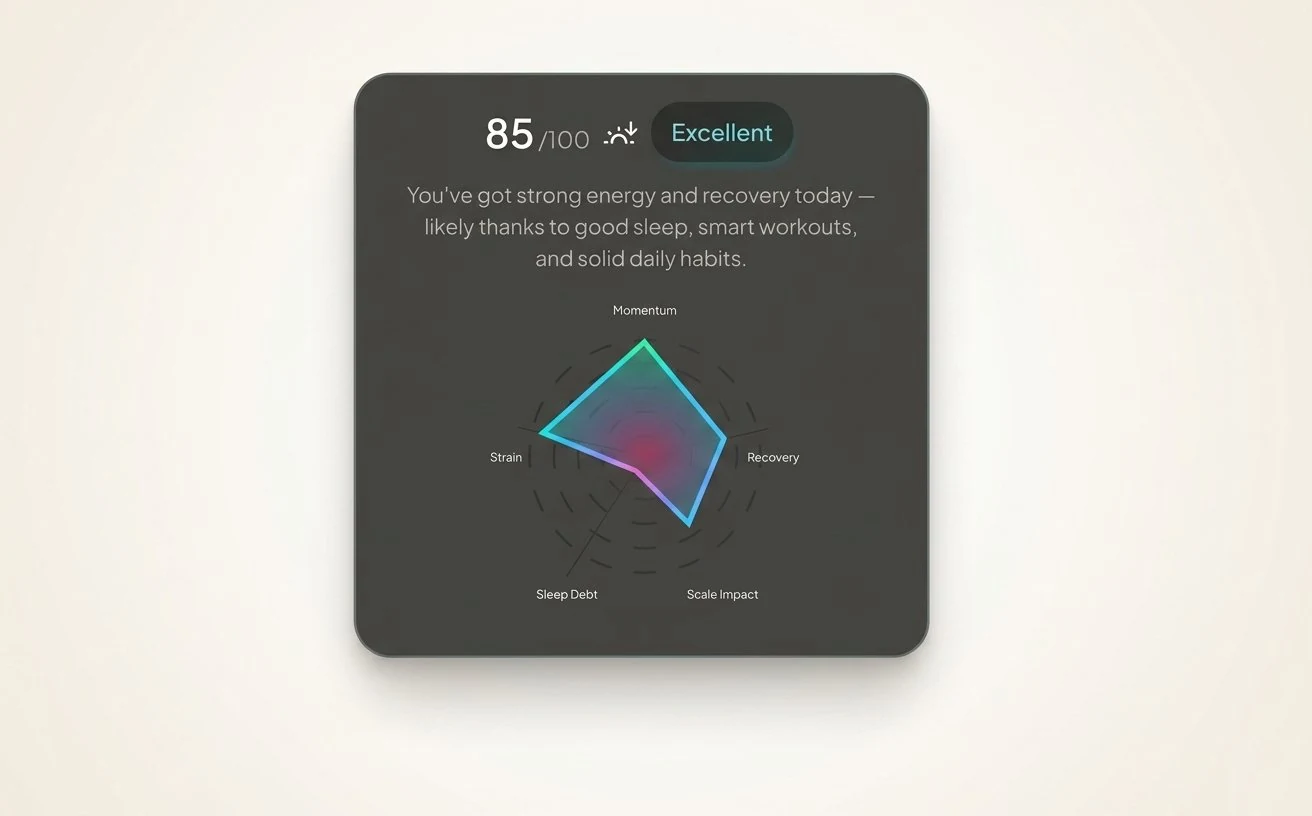
Your underlying metabolic baseline, how much energy your body can produce and sustain across the day. High Metabolic Capacity correlates with better mitochondrial function, more reliable energy through the day, and resilience to physical and mental stressors. Low Metabolic Capacity is an early warning that something in your habits (poor sleep, chronic stress, undertraining, or overtraining) is depleting your reserves.
Metabolic Momentum
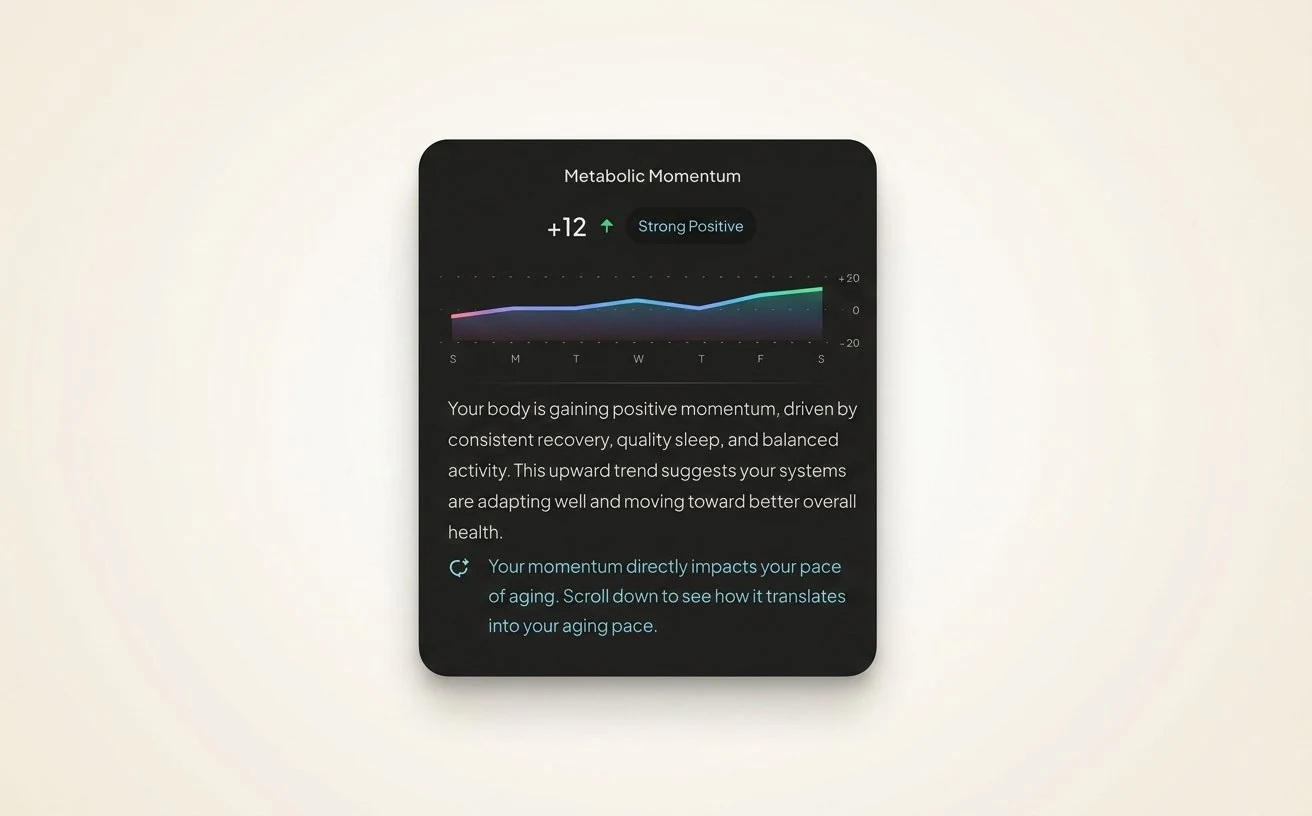
Short-term metabolic responsiveness, whether your habits this week are improving or draining your long-term health. Think of it as your speedometer. Metabolic Capacity tells you where you are. Metabolic Momentum tells you the direction you are heading. If Momentum is trending down for three weeks straight, something is slowly draining you, time to investigate.
Heart Resilience
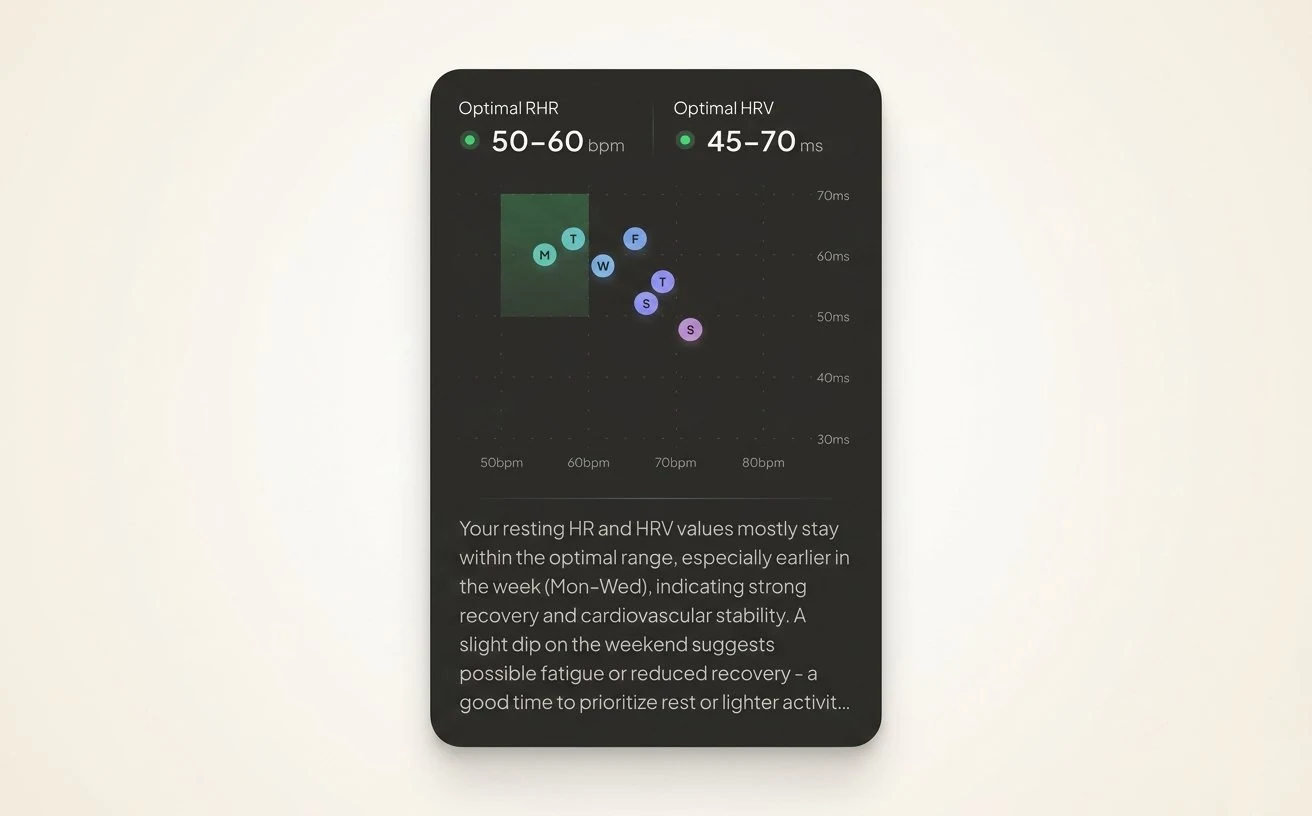
Cardiovascular adaptability over time, the inverse of cardiac strain. High Heart Resilience means your cardiovascular system is handling daily demands gracefully. Low Heart Resilience often shows up before symptoms, an early signal that your nervous system is overloaded, your sleep is breaking down, or your fitness is regressing. The underlying mechanism, autonomic balance between sympathetic and parasympathetic tone, is one of the most extensively studied physiological signals in cardiovascular medicine, and the peer-reviewed literature on HRV and autonomic function is what gives this metric its clinical weight.
Sleep Quality
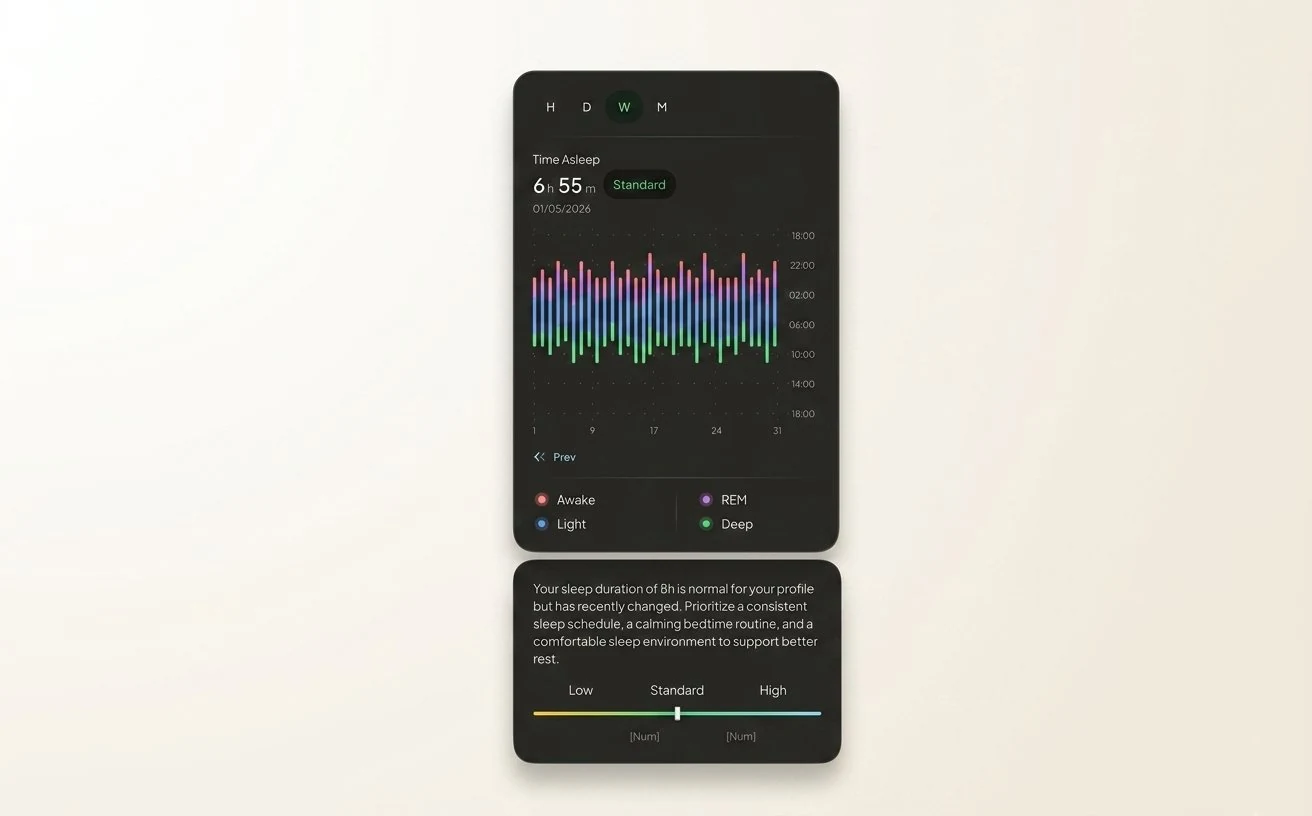
Sleep Quality breaks down each night into the underlying sleep stages (light, deep, REM, awake) and tracks the architecture of your sleep over time. The Hume Band 2.0 does not just tell you how many hours you slept, it tells you whether the hours were restorative. As a physiotherapist, this matters enormously: sleep is the single most powerful recovery variable in your control, and most people overestimate their sleep quality by a wide margin. Seeing your real deep-sleep and REM percentages, your wake events, and how those shift with alcohol, late meals, late training, or stress, is the kind of feedback loop that genuinely changes behavior. Sleep Quality also feeds into Recovery, Metabolic Momentum, and the Longevity Index, so improving sleep moves several scores at once.
Circadian HRV Desynchronization
This is one of the most quietly powerful metrics on the Hume Band 2.0. Your heart rate variability does not just rise and fall randomly across the day, it follows a 24-hour rhythm dictated by your internal biological clock. In a healthy, well-aligned body, HRV should be highest in the early morning hours (reflecting deep parasympathetic recovery during sleep) and gradually decline through the day as your body prepares for activity. When that rhythm becomes desynchronized (a flatter curve, a delayed peak, or peaks at unexpected times), it is a signal that your body’s master clock is out of sync with your behavior.
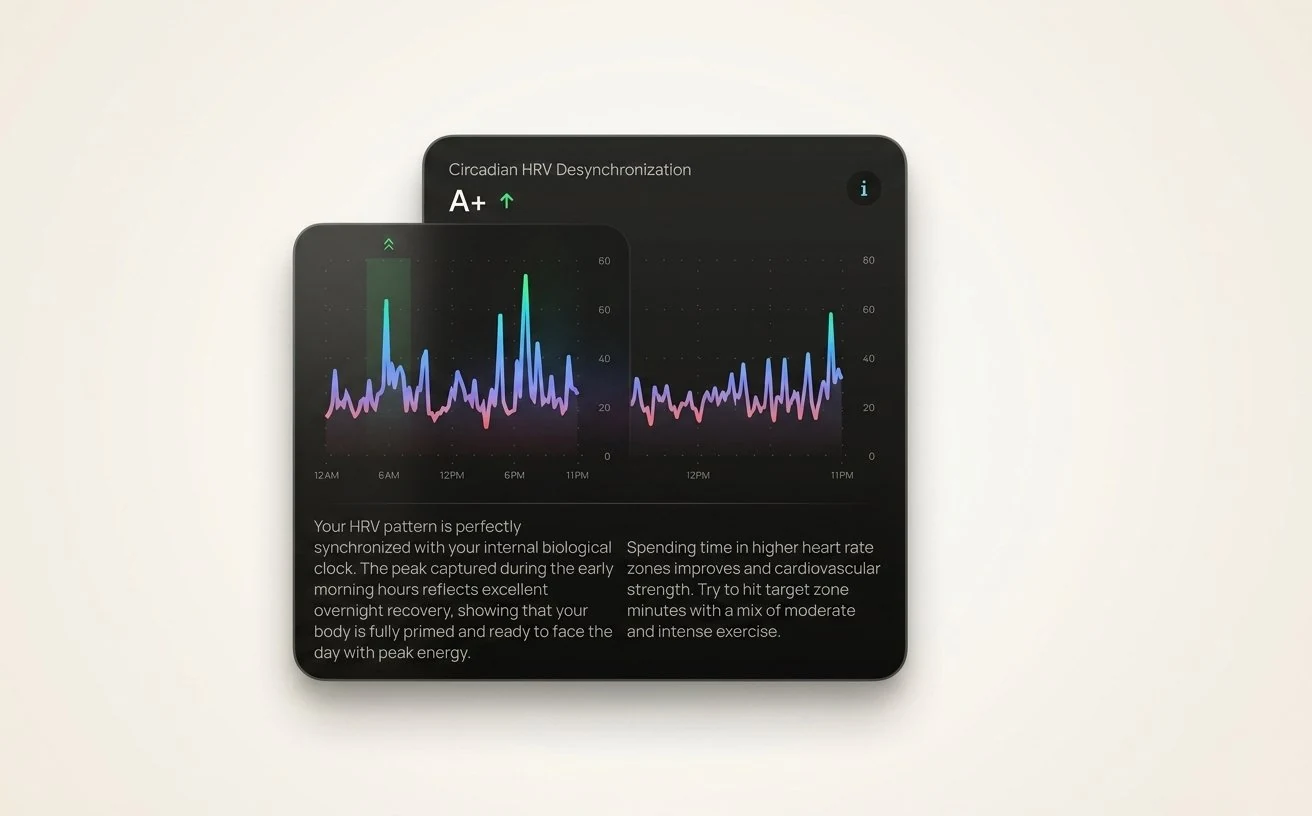
This metric matters because it is one of the earliest visible markers of chronic stress, shift work damage, jet lag effects that have not fully resolved, or simply behavior that is misaligned with your biology (eating too late, staring at screens until midnight, sleeping at irregular hours). The Hume Band 2.0 tracks circadian HRV passively, day after day, and surfaces a grade (A+ through F) that tells you whether your biological clock is happy. As you will see in the next section, this is also one of the most fascinating data points for thinking about where wearable health tech can go next.
Longevity Index
A composite biomarker estimate that synthesizes Metabolic Capacity, Heart Resilience, HRV trend, sleep architecture, and Blood Pressure Insights into a single number you can track over time. It is not a perfect prediction of your actual lifespan (no wearable can claim that honestly), but it is a directionally meaningful score that tells you whether your habits are moving you toward longer healthspan or away from it.
Biological Age
An estimate of how old your body is functioning, vs your actual chronological age. A 45-year-old with a 32-year biological age is functioning 13 years younger than their birth certificate suggests, which is what excellent recovery, low resting heart rate, high HRV, and stable blood pressure trends all add up to. The Hume Band 2.0 also shows a confidence rating (typically 85 to 95 percent) that qualifies how strong the underlying signal is, which is a quietly mature design choice most wearables skip.
Blood Pressure Insights (NEW for 2.0)
Directional pattern detection in your blood pressure across hours, days, and weeks. Not a cuff replacement, but a longitudinal trend monitor that can spot when your average resting systolic is creeping upward, when your blood pressure correlates with poor sleep or alcohol, or when patterns suggest undiagnosed sleep apnea. See the dedicated deep-dive earlier in this review for the full clinical context.
Pace of Aging
Pace of Aging tells you whether your body is currently aging faster or slower than your chronological years. While Biological Age is a snapshot (“how old your body is functioning right now”), Pace of Aging is the velocity: it shows whether your recent habits are accelerating or decelerating the rate at which your body is aging. A Pace of Aging score lower than 1.0 means you are aging slower than the calendar, higher than 1.0 means you are aging faster. The score updates as the underlying biomarker trends shift, so you can see in real time whether a change in sleep, training, stress management, or nutrition is actually moving the needle.
Chronic Illness Detection
Chronic Illness Detection is a pattern-recognition layer that watches for combinations of biomarker shifts that may indicate the early onset of illness. The Hume Band 2.0 looks for patterns like sustained HRV drops paired with rising resting heart rate and skin temperature, or recovery declines combined with disrupted sleep architecture, then surfaces an alert that says “this is worth paying attention to.” It is not a diagnostic tool, it does not name conditions, and it does not replace clinical care. But as a low-friction early warning system, it can flag patterns weeks before symptoms appear. Used in tandem with your existing healthcare, it adds a useful continuous-monitoring layer most people simply do not have access to.
Who Should (and Shouldn’t) Buy the Hume Band 2.0?
✅ The Hume Band 2.0 Is Perfect for You If:
- You care more about long-term health trends than daily fitness scores
- You are 35+ and starting to take cardiovascular and metabolic health seriously
- You want continuous blood pressure trend visibility without a separate cuff device
- You are recovering from burnout or chronic stress and want HRV-based recovery guidance
- You hate the subscription lock-in of Whoop and Oura
- You want a screen-free device that does not pull you back to your phone
- You found previous trackers uncomfortable for 24/7 wear and need the new UltraLux strap
- You upgraded from the original Hume Band and want the doubled battery and Blood Pressure Insights
🚫 The Hume Band 2.0 Might Not Be For You If:
- You want on-wrist notifications, watch faces, or smartwatch features
- You need GPS tracking for runs, rides, or outdoor sports
- You are a hardcore data analyst who wants raw HRV time-domain values and custom dashboards
- You expect a cuff-replacement medical-grade blood pressure monitor (the Hume Band 2.0 is trend-based, not clinical)
- You will give up after a week if you do not see dramatic insights (the device needs 2 to 4 weeks to calibrate)
- You already have the original Hume Band and you do not care about the 5 new features
The Hume Band 2.0 Is a Beginning, Not a Destination
Where wearable health tech can go next, and why the circadian data you just saw is the most important hint we have.
Stepping back from the spec sheet for a moment, I want to share something the wearable industry rarely talks about openly. The Hume Band 2.0 is genuinely one of the smartest devices on the market today. But viewed through a physiotherapist’s lens, it is also the foundation of something much larger that is coming next.
Your circadian rhythm is the master regulator
Almost every system in the human body runs on a 24-hour clock. Cortisol peaks in the morning to wake you up. Testosterone follows its own daily curve, peaking shortly after sunrise in healthy men. Melatonin rises in the evening to prepare you for sleep. Body temperature dips before bed and rises before you wake. Insulin sensitivity, blood pressure, growth hormone release, immune cell trafficking, gene expression patterns in your liver and muscles, all of these are timed by your master biological clock. When this clock is well-synchronized with your behavior (sleep at consistent times, light exposure in the morning, meals at regular intervals), you feel resilient, sleep well, recover quickly, and your long-term disease risk drops measurably. The NIH National Institute on Aging dedicates an entire research unit to this exact intersection of circadian biology and long-term health.
When this clock is desynchronized (shift work, jet lag, late-night screens, irregular eating windows, chronic stress), every system pays a price. Cortisol stays elevated when it should fall. Testosterone production drops in men. Inflammatory markers rise. Recovery slows. Sleep architecture fragments. And over years, lifespan itself appears to shorten.
The Circadian HRV metric you saw earlier on the Hume Band 2.0 is the very first window most consumers have ever had into this fundamental layer of their biology. That is genuinely a quiet revolution.
What the Hume Band 2.0 already does, and what it does not
The Hume Band 2.0 tracks the outputs of your circadian system beautifully: HRV rhythm, sleep architecture, heart rate patterns, blood pressure trends, skin temperature shifts. What it does not do (yet) is correlate those outputs with the inputs you actually control: when you ate, what you ate, how much water you drank, what time you saw bright light, what time you exercised, whether you took a hot shower before bed, whether you had alcohol, whether you were in a high-stress meeting. Those inputs are the levers. Without them, the device can tell you something is off, but it cannot fully tell you why.
What I would love to see in a Hume Band 3.0
Imagine opening your Hume Health app one morning and reading: Your circadian HRV grade dropped from A+ to B- last week. The pattern correlates most strongly with three behaviors: meals consumed after 9pm on four nights, water intake 32% below your weekly average, and stress events logged from your calendar between 8pm and 10pm. Try a 7pm dinner cutoff for seven days, hydration target 2.8L, and a 30 minute screen-free wind-down. We will measure your circadian recovery and report back next Sunday.
That is not science fiction. The Hume Band 2.0 already measures the biomarkers. Apple’s Health app, MyFitnessPal, Cronometer, Apple Calendar, Strava, and most home environment sensors already capture the inputs. The missing piece is an AI layer trained on enough longitudinal cross-variable data to surface the connections automatically. We are maybe two to three product generations away from that being a consumer reality.
If Hume Health releases a Hume Band 3.0 in 2027 or 2028 with deep integrations into your existing data ecosystem (calendar, nutrition app, smart hydration tracker, smart home, environmental sensors) and an AI that correlates inputs to circadian outputs in real time, that is the device that genuinely changes the longevity conversation. For now, the Hume Band 2.0 is the right foundation, and tracking your circadian HRV today is the best preparation you can do for the integrated personalized health stack that is coming next.
Final Verdict, Is the Hume Band 2.0 Worth It?

The Hume Band 2.0 is a confident, mature second-generation product. The hardware upgrades (14-day battery with 5-minute quick-charge, UltraLux strap, improved signal accuracy validated in third-party testing, and the new Blood Pressure Insights) are all meaningful, and none feel like marketing filler.
The pricing is fair, the subscription stays optional (a rarity in this category), the 45-day return policy removes most of the risk of trying it, and the combination of an included 1-year warranty plus a $35 extension to 10 years signals long-term confidence in the hardware. For Hume Premium subscribers, the free upgrade-every-2-years benefit is a genuinely unusual long-term value lever you will not find elsewhere.
For users coming from the original Hume Band, the upgrade decision comes down to whether the five new things (doubled battery, UltraLux strap, Blood Pressure Insights, improved signal accuracy, nutrition tracking arriving June 2026) are worth $199 with code MYREVIEWABOUT. For most v1 owners, the Blood Pressure Insights feature alone justifies the upgrade if cardiovascular health is on your radar. If you currently own the v1 and want the full upgrade breakdown, the Hume Band 2.0 vs 1.0 comparison walks through the decision in detail.
For first-time buyers, the Hume Band 2.0 is one of the most thoughtful entry points into serious longevity tracking available today. It is honest about what it is (a passive longevity tool, not a smartwatch, not a medical device), it does what it promises, and it does not lock you into a subscription to access your own data. If you want the bigger-picture overview of the device and what makes it different, the Hume Band 2.0 hub covers the full feature lineup beyond this review.
One last thing worth saying plainly: this is not a magic device. The Hume Band 2.0 will not make you healthier by sitting on your wrist. Its value depends entirely on what you do with the data. You have to learn how to read your scores, take the app’s recommendations seriously, and let the trends teach you about your own body over time. The users who get the most out of it are the ones who treat it as a long-term learning tool: noticing how a week of poor sleep tanks their Metabolic Momentum, how cutting alcohol moves their HRV, how an extra walk after dinner shifts their blood pressure trend. That is the real return on a device like this, not the score on day one, but the habits you build because the score finally showed you what was actually going on. Wear it consistently, read the data honestly, and let it shape better choices, and the Hume Band 2.0 will repay the investment many times over.
Hume Band 2.0 Price, Shipping & Return Policy
Here is what you need to know about cost, shipping, and the return policy before grabbing your Hume Band 2.0:
Retail Price of the Hume Band 2.0
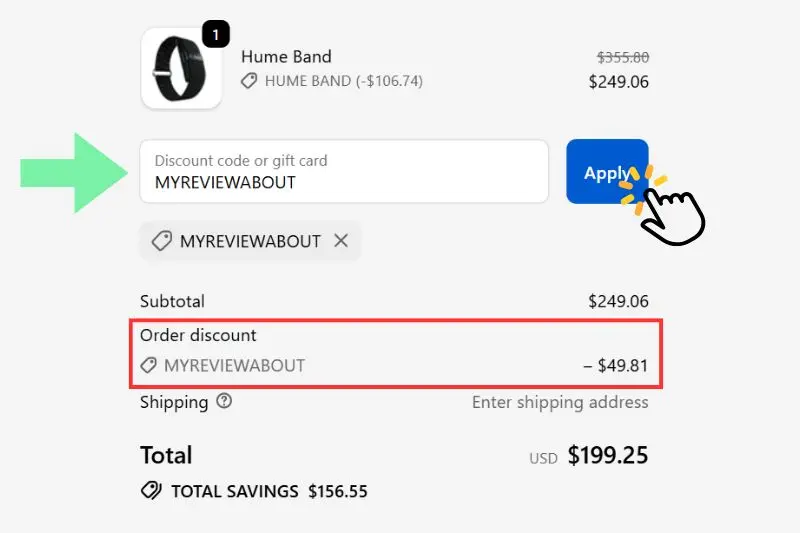
- The original retail price of the Hume Band 2.0 is $356 USD. Hume Health is currently running a sale that brings the price down to $249 USD, with no subscription required to use the core features (Metabolic Capacity, Metabolic Momentum, Recovery, Blood Pressure Insights, Biological Age, Pace of Aging, Chronic Illness Detection, Longevity Index).
✅ You get full access to all essential metrics right out of the box, no monthly fees required.
💸 Stack the Current Sale with Code MYREVIEWABOUT
Use the exclusive code MYREVIEWABOUT at checkout to get an additional 20% discount on top of the current sale, bringing the final price all the way down to $199 USD. That is $156 saved off the $356 retail, the best price currently available for the Hume Band 2.0.
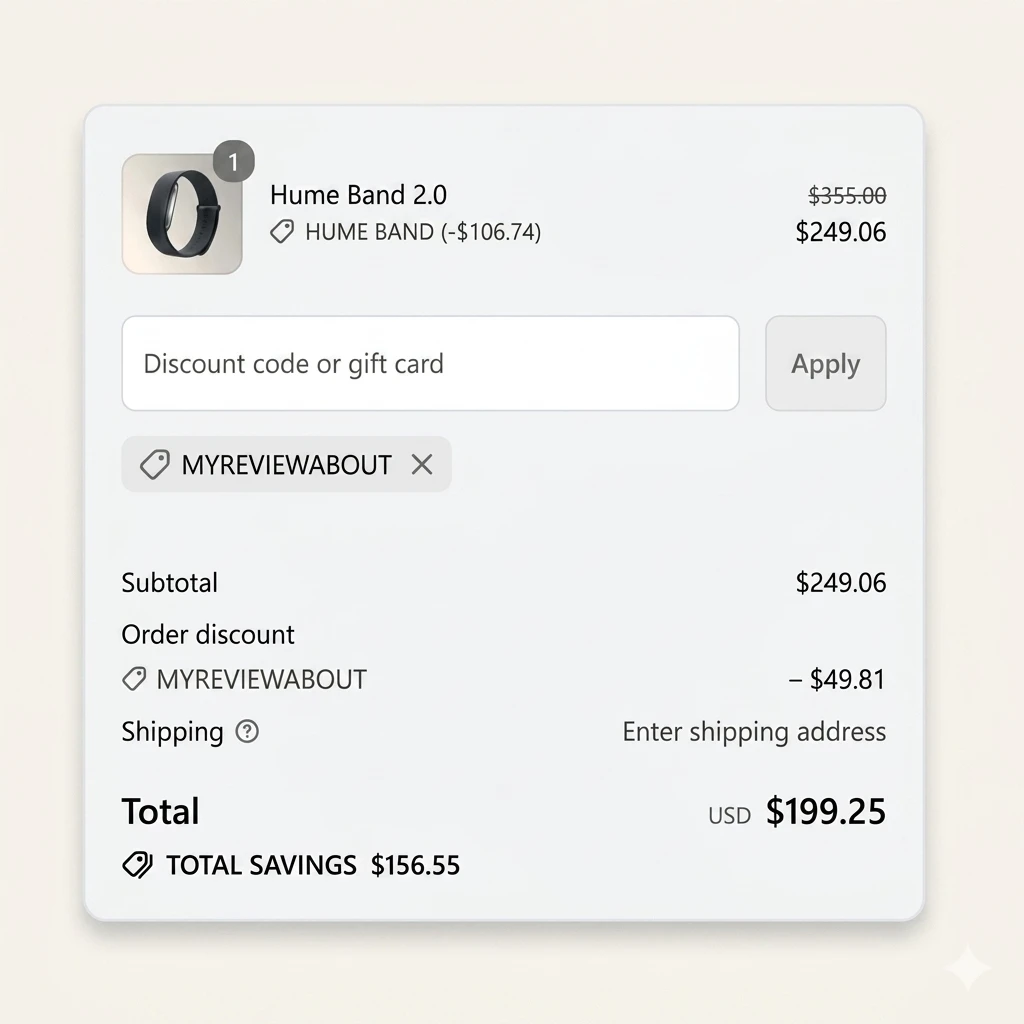
⚠️ Prices may change at any time, but as long as this coupon is active, the 20% discount stays valid. I honestly do not know when the promotion will end, grab it while you can.
Shipping & Return Policy
- Free worldwide shipping on all Hume Health orders over $20.
- 45-Day No-Questions-Asked Return Policy, applies even on used and opened products. Test the Hume Band 2.0 risk-free for a full month and a half before committing.
- 1-Year Warranty Included, with an optional extension to 10 years for $35, a long-term confidence signal in the hardware.
- IP68 water-resistant to 1 meter for up to 2 hours, safe for showers, rain, and swimming.
FAQ, Frequently Asked Questions about the Hume Band 2.0
1. Is the Hume Band 2.0 a medical device?
No. The Hume Band 2.0 is a consumer wellness device, not a regulated medical device. It is designed to give you trend visibility on your biomarkers (heart rate, HRV, SpO₂, skin temperature, sleep, and blood pressure patterns) so you can make informed lifestyle choices. It does not diagnose conditions, and it does not replace clinical care. If you have a known cardiovascular condition or your data raises concerns, see a clinician.
2. Do I need a monthly subscription to use the Hume Band 2.0?
No. The core features work perfectly without a subscription. You get access to all key metrics, scores, and the main functionality. The Hume Premium Membership ($8.99/month) unlocks premium features like AI-driven personalized coaching and a free Hume Band upgrade every 2 years, but it is entirely optional.
3. How accurate is the Blood Pressure Insights feature?
The Hume Band 2.0’s Blood Pressure Insights feature is calibrated for trend accuracy, not absolute reading accuracy. It tracks directional patterns in your blood pressure over hours, days, and weeks, not isolated cuff-equivalent numbers. For absolute clinical readings, you still need a validated cuff monitor. The Hume Band 2.0’s value is in spotting pattern changes (a creeping average, a correlation with poor sleep, etc.) that a once-monthly cuff reading would miss entirely.
4. What is the difference between the Hume Band 1.0 and 2.0?
The 2.0 brings five main upgrades over the original: doubled battery life (14 days vs 7), the new UltraLux soft-touch strap, Blood Pressure Insights trend tracking, improved signal accuracy via better processing, and nutrition tracking (arriving June 2026 as a software update). Your Hume Premium subscription and historical data carry over between v1 and v2 automatically.
5. Is the 14-day battery life realistic in real-world use?
Hume claims up to 14 days of battery on a single charge, noting that frequent syncing and continuous tracking may reduce that. The original Hume Band was rated 7 days and held up well in real-world use, so the doubled rating should translate to meaningful real-world gains. The 5-minute quick-charge for a full day of tracking is the more practically important spec: even if you forget to charge overnight, you are covered in the time it takes to shower.
6. How does the Hume Band 2.0 compare to a Whoop or Oura Ring?
Different positioning. Whoop targets athletic recovery and requires a mandatory monthly subscription to function at all. Oura is a ring focused primarily on sleep and readiness, also with a subscription requirement. The Hume Band 2.0 targets healthspan (long-term cardiovascular and metabolic biomarkers) and works fully without a subscription. If you are a competitive athlete, Whoop’s ecosystem may serve you better. If you care more about long-term health trends and want to avoid mandatory subscriptions, the Hume Band 2.0 is the stronger pick. See the detailed comparison tables above.
7. When does the Hume Band 2.0 ship?
The Hume Band 2.0 is available now and ships worldwide directly from Hume Health, with free worldwide shipping included on orders over $20. The nutrition tracking feature is a planned software update scheduled for June 2026.
8. What is the return policy on the Hume Band 2.0?
Hume offers a 45-day, no-questions-asked return and exchange policy on the Hume Band 2.0, with free returns. The policy applies even to used and opened products. That is longer than most wearables in this price range, and enough time to wear the device through a full baseline period before committing. Each Hume Band 2.0 also comes with a 1-year warranty included, optionally extendable to 10 years for $35. The device is IP68-rated (water-resistant 1 meter for up to 2 hours).
9. Can I use the Hume Band 2.0 without the Hume Health app?
The Hume Band 2.0 requires the Hume Health app (iOS 14.0+ or Android 8.0+) to access your data and scores. The device hardware itself records the biometric signals continuously, but you need the app to view the translated metrics. The app is free to download regardless of whether you subscribe to Hume Premium.
10. Is the Hume Band 2.0 worth the price?
Retail is $356, the current sale brings it to $249, and code MYREVIEWABOUT drops it further to $199, a $156 saving off retail. At $199 with free worldwide shipping and a 45-day return, the Hume Band 2.0 is one of the most accessible entry points into serious longevity tracking, with no required subscription to access your own biomarker data. Using the discount with the MYREVIEWABOUT code is the obvious move.